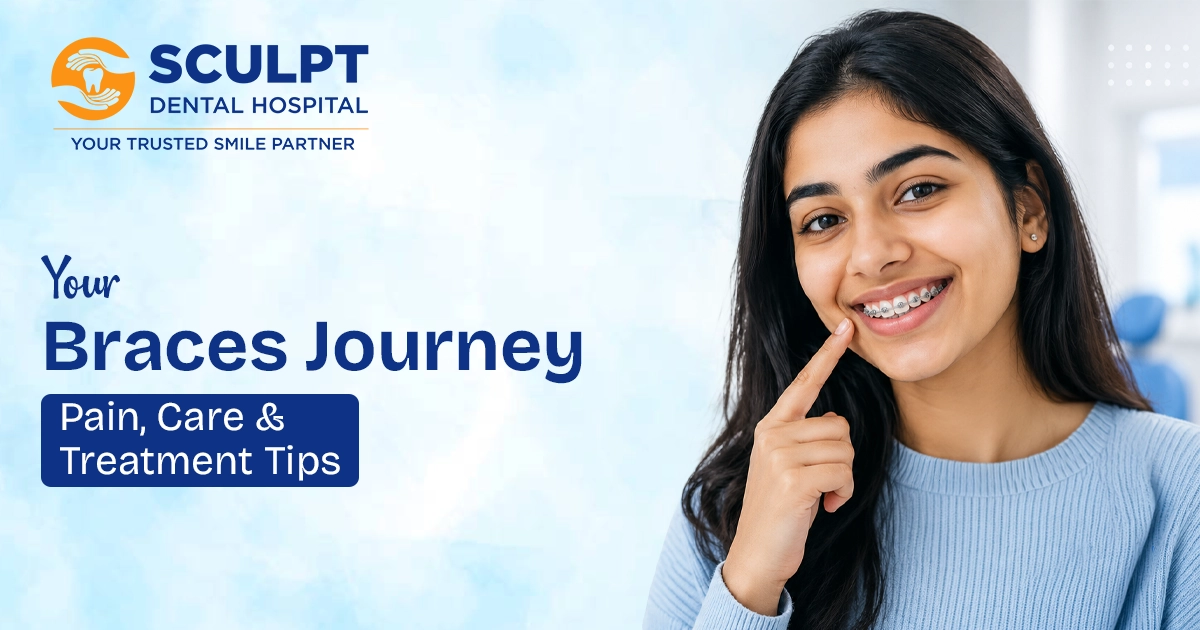
If you are thinking about getting braces, one of the first questions you may have is: Do dental braces hurt?
The simple answer is: braces can cause mild pressure, tenderness or soreness, especially when they are first fitted or adjusted, but this discomfort is usually temporary. Most people describe the sensation as pressure or a dull ache rather than severe pain.
If you are considering Dental Braces in Anna Nagar, understanding what happens during each stage of treatment can help you feel more confident and prepared. At SCULPT Dental Hospital, orthodontic treatment is planned according to your teeth, bite, alignment and individual smile goals.
Why Do Dental Braces Cause Discomfort?
Braces straighten teeth by applying gentle and controlled pressure over time. This gradually encourages the teeth to move toward their planned positions.
As your teeth and surrounding tissues respond to this movement, you may temporarily experience tenderness while chewing, pressure around certain teeth, mild gum soreness or irritation on the inside of your cheeks.
According to the American Association of Orthodontists, discomfort associated with braces is generally temporary and is often most noticeable when braces are first placed or following adjustments.
Do Braces Hurt When They Are First Put On?
Getting braces fitted itself generally does not cause significant pain. However, pressure and soreness may develop during the first few hours after the braces begin moving your teeth.
During a typical appointment, brackets are attached to the teeth and connected using an orthodontic wire. The wire creates controlled forces that gradually reposition the teeth.
For many patients, the first few days are the main adjustment period. As your mouth becomes accustomed to the appliance, the initial tenderness usually becomes easier to manage.
Patients considering Dental Braces in Anna Nagar can learn more about the available orthodontic options through SCULPT Dental Hospital’s Dental Braces in Chennai service page.
What Can You Expect During the First Week With Braces?
The first week with braces is usually an adjustment period.
First 24 Hours
Your braces may initially feel unusual or bulky. As the orthodontic forces begin working, you may gradually notice pressure around your teeth.
Days 2–3
Tenderness can become more noticeable when biting or chewing. Choosing soft foods during this stage can make eating more comfortable.
Days 4–7
For many patients, the initial soreness gradually decreases as the mouth adapts to the braces.
Everyone responds differently, so the intensity and duration of discomfort can vary.
What Foods Can You Eat After Getting Braces?
Eating softer foods during the first few days can reduce pressure on sensitive teeth.
Foods such as soft rice, idli, curd, soup, pasta, eggs, cooked vegetables, bananas and smoothies may be easier to eat.
Hard, crunchy, chewy and sticky foods should generally be avoided because they can put unnecessary pressure on your braces and may damage brackets or wires.
The American Dental Association provides additional information about braces, oral hygiene and caring for your teeth during orthodontic treatment.
Do Braces Hurt After Every Adjustment?
You may experience mild soreness after a braces adjustment, but it usually settles within a few days.
Periodic adjustments are an important part of orthodontic treatment because the forces applied to your teeth need to be modified as the teeth gradually change position.
After an adjustment, you may notice temporary pressure, tenderness while chewing or mild tooth sensitivity. This generally decreases as your teeth adapt.
If pain becomes severe or continues longer than expected, speak with your orthodontist.
Can Brackets and Wires Hurt Your Cheeks?
Yes. During the early stages of treatment, brackets or wires may occasionally rub against your cheeks, lips or gums.
Your mouth normally adapts over time. Orthodontic wax may also be used as a temporary protective barrier between the braces and irritated soft tissues.
If a wire becomes loose, protrudes into your cheek or causes persistent irritation, it is better to contact your orthodontic team rather than attempting to repair it yourself.
How Can You Reduce Braces Discomfort?
Most braces-related discomfort can be managed with simple measures.
Choosing soft foods for the first few days can reduce pressure while chewing. Orthodontic wax may help when brackets rub against your lips or cheeks, while a gentle warm salt-water rinse may soothe minor mouth irritation.
A cold compress against the outside of the cheek may also feel soothing.
Most importantly, follow the aftercare recommendations provided by your orthodontist because your treatment requirements may differ from those of another patient.
When Is Braces Pain Not Normal?
Severe, sharp, persistent or worsening pain should not simply be considered a normal part of braces treatment.
You should contact your orthodontic team if you experience significant swelling, severe pain, persistent mouth sores, a broken bracket or a wire that continuously pokes the cheek or gums.
The NHS guidance on braces also recommends seeking advice from your orthodontic team if braces become damaged or you experience ongoing problems during treatment.
How Long Does Braces Treatment Take?
The duration of braces treatment varies from one person to another. It depends on factors such as the severity of crowding, gaps between teeth, bite problems, treatment method and how the teeth respond to orthodontic forces.
Keeping scheduled appointments and following your orthodontist’s instructions can also play an important role in keeping treatment on track.
An orthodontic consultation is therefore necessary to provide a realistic estimate based on your individual condition.
Are Braces Only for Teenagers?
No. Orthodontic treatment can be suitable for both teenagers and adults.
Adults may consider braces because of crowded teeth, gaps, bite problems or concerns about the appearance of their smile.
Age alone does not determine whether orthodontic treatment is appropriate. The health of your teeth and gums, your bite and your individual orthodontic requirements should all be evaluated.
If you are considering orthodontic treatment as an adult, SCULPT Dental Hospital offers information about different treatment options through its orthodontic services page.
What Types of Dental Braces Are Available?
Modern orthodontic treatment provides different approaches to straightening teeth.
Metal Braces
Traditional metal braces use brackets and wires to gradually reposition teeth. They can be used to address a wide range of orthodontic concerns.
Ceramic Braces
Ceramic braces work using a similar principle but use less noticeable brackets, making them an option for patients concerned about the appearance of conventional metal braces.
Clear Aligners
Clear aligners use a series of removable trays to gradually reposition teeth in suitable cases.
Not every treatment is suitable for every person. An orthodontic assessment is necessary before deciding which option is appropriate.
Braces or Invisalign: Which Is More Comfortable?
Both braces and clear aligners can cause temporary pressure because both treatments work by gradually moving teeth.
Clear aligners do not use conventional brackets and wires, which may make them appealing to patients looking for a discreet treatment. However, they are not automatically the right choice for every orthodontic problem.
Your dentist or orthodontist should assess your tooth position, bite, crowding, treatment complexity and lifestyle before recommending an option.
For patients comparing different approaches, SCULPT Dental Hospital also provides information about Invisalign treatment in Chennai.
Want to Know More About Braces Pain?
If discomfort is one of your biggest concerns before beginning treatment, SCULPT Dental Hospital has also covered this topic specifically in the previous blog Are Metal Braces Painful?.
Reading related orthodontic content can help you understand the difference between normal treatment pressure and discomfort that may require professional attention.
Why Choose SCULPT Dental Hospital for Dental Braces in Anna Nagar?
Choosing an orthodontic provider is about more than simply achieving straighter teeth. Treatment planning should consider alignment, bite, oral health, facial balance and long-term stability.
SCULPT Dental Hospital provides orthodontic care for patients looking for Dental Braces in Anna Nagar, with treatment options selected according to individual dental and orthodontic requirements.
A consultation allows your dental team to examine your teeth, discuss your concerns and explain the most appropriate treatment options before you decide to proceed.
Frequently Asked Questions About Dental Braces
Do dental braces hurt a lot?
Usually, no. Braces may cause temporary pressure or tenderness after fitting and adjustments, but severe pain is not generally expected.
How long does braces pain last?
Initial soreness often improves within a few days. Individual experiences can vary depending on the treatment and tooth movement.
Does tightening braces hurt?
An adjustment can cause temporary pressure or tenderness because the orthodontic forces have been modified to continue moving your teeth.
Can I eat normally after getting braces?
You may need softer foods during the first few days. Once the tenderness settles, you can gradually return to a broader diet while avoiding foods that could damage your braces.
Are dental braces suitable for adults?
Yes. Adults can undergo orthodontic treatment when their oral health and orthodontic condition make them suitable candidates.
What should I do if a braces wire starts hurting?
Orthodontic wax may temporarily reduce irritation. However, a protruding or damaged wire should be checked by your orthodontic team.
Are ceramic braces less painful than metal braces?
Both treatments move teeth using orthodontic forces, so temporary pressure can occur with either. Individual comfort levels vary.
Where can I get Dental Braces in Anna Nagar?
Patients considering braces can visit SCULPT Dental Hospital in Anna Nagar for an orthodontic evaluation and personalised treatment recommendation.
Start Your Smile Journey With SCULPT Dental Hospital
Concern about temporary discomfort should not prevent you from exploring whether orthodontic treatment is right for you. For most patients, braces-related soreness is temporary and becomes easier to manage once the mouth adapts.
If you are searching for Dental Braces in Anna Nagar, consult SCULPT Dental Hospital for an orthodontic evaluation and a personalised treatment plan based on your teeth, bite and smile goals.
Ready to start your orthodontic journey? Contact SCULPT Dental Hospital to book your consultation today.