
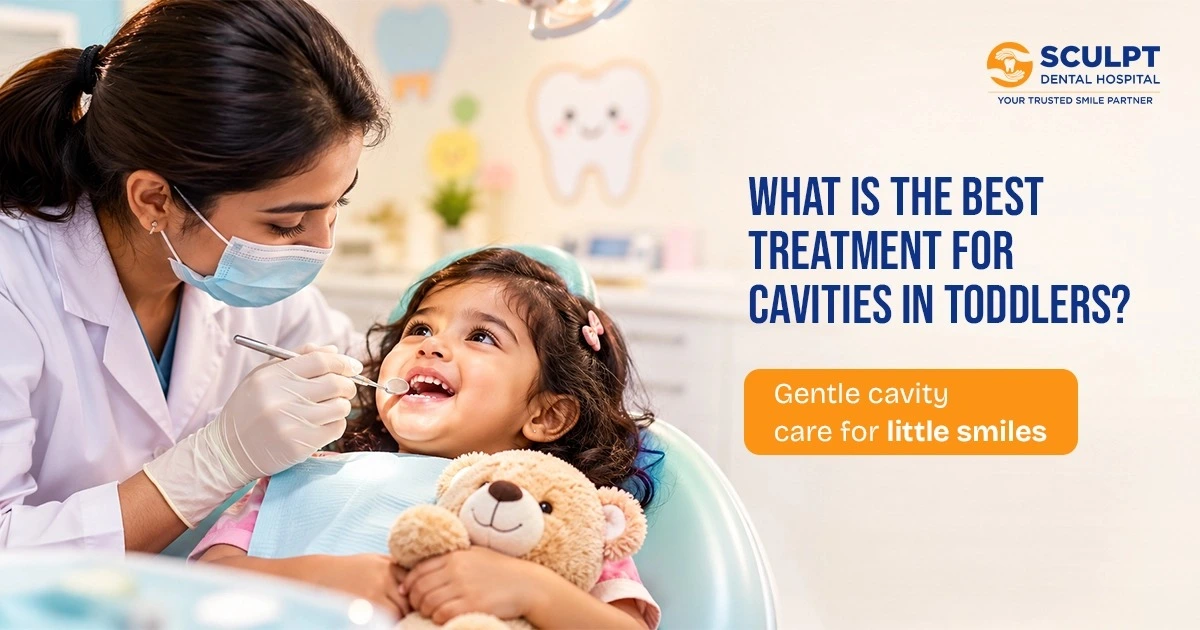
The best treatment for cavities in toddlers depends on how deep the tooth decay is. Early-stage cavities may be managed with fluoride varnish, while more advanced decay may require dental fillings, silver diamine fluoride, pediatric crowns or pulp treatment. A pediatric dentist will recommend the most suitable option after examining the child’s teeth.
Discovering a cavity in your toddler’s teeth can be worrying. Many parents wonder whether the tooth needs a filling, whether treatment will hurt or whether it is better to wait until the baby tooth falls out naturally.
However, untreated cavities in toddlers can lead to pain, infection, difficulty eating and premature tooth loss.
Parents looking for Pediatric Dentistry in Chennai can benefit from understanding the available treatments and the importance of early dental care.
Let’s explore the common treatment options for toddler cavities and how to protect your child’s developing smile.
Why do toddlers get cavities?
Cavities in toddlers are often associated with a condition called early childhood caries (ECC).
This occurs when bacteria in the mouth produce acids from sugars, gradually damaging tooth enamel.
Several factors can increase the risk of tooth decay in young children.
1. Frequent consumption of sugary foods
Sweetened drinks, biscuits, chocolates and frequent sugary snacks can increase the number of acid attacks on tooth enamel.
Over time, this may lead to cavities.
2. Bedtime feeding habits
Allowing toddlers to fall asleep with bottles containing milk, formula or sweetened liquids can increase the risk of tooth decay, particularly when teeth are not cleaned afterward.
3. Inadequate brushing
Young children cannot clean their teeth effectively without help.
When plaque remains on tooth surfaces, bacteria can contribute to enamel damage and cavity formation.
4. Naturally vulnerable baby teeth
The enamel and dentine layers of baby teeth are thinner than those of permanent teeth, allowing cavities to progress toward the pulp relatively quickly.
5. Delayed dental check-ups
When children do not receive regular dental examinations, early signs of decay may go unnoticed.
Parents can learn more about preventive care through Pediatric Dentistry in Chennai at Sculpt Dental Hospital.
What are the best treatments for cavities in toddlers?
There is no single treatment suitable for every toddler. Dentists select treatment based on the severity of decay, the affected tooth, the child’s age and the presence of pain or infection.
1. Fluoride varnish for early tooth decay
Fluoride varnish is commonly used to strengthen tooth enamel and support the remineralization of early-stage tooth decay.
It is particularly helpful when the tooth has developed an initial white spot lesion but no significant cavity has formed.
Benefits of fluoride varnish include:
- Quick and minimally invasive application.
- Helping strengthen tooth enamel.
- Supporting the management of early decay.
- Reducing the risk of future cavities.
- Suitability for many young children.
Fluoride varnish cannot rebuild a large hole in a tooth. If the cavity has progressed, additional treatment may be needed.
2. Dental fillings for small to moderate cavities
When a toddler develops a cavity that has damaged the tooth structure, a dental filling may be recommended.
The dentist removes or selectively manages the decayed tissue and restores the tooth with a suitable dental material.
Common materials include tooth-colored composite resin and glass ionomer cement.
Advantages of dental fillings include:
- Restoring the shape and function of the tooth.
- Helping prevent further breakdown of the affected area.
- Improving comfort when chewing.
- Preserving healthy tooth structure.
For some toddlers, minimally invasive approaches such as atraumatic restorative treatment (ART) may be suitable.
Early treatment can help prevent a small cavity from developing into a more serious dental problem.
3. Silver diamine fluoride for managing tooth decay
Silver diamine fluoride (SDF) is a liquid applied by dental professionals to certain decayed tooth surfaces to help stop cavity progression.
It can be useful for young children who are anxious or unable to tolerate conventional restorative procedures.
SDF treatment is usually quick and does not require drilling.
However, parents should understand that the treated decayed area commonly turns permanently black.
SDF does not restore missing tooth structure and regular dental follow-up is essential. It is also unsuitable for some teeth with pulp-related symptoms or infections.
According to the American Dental Association’s guidance on silver diamine fluoride, its use for cavity management requires an individualized treatment plan and professional monitoring.
4. Pediatric Dental Crowns for Larger Cavities
When a baby tooth has extensive decay, a dental crown may provide better protection than a conventional filling.
Crowns cover the affected tooth and help restore its function.
Depending on the tooth and clinical situation, dentists may recommend stainless steel crowns or aesthetic pediatric crowns.
Some suitable baby molars can be managed using the Hall Technique, where a preformed crown seals the decay without conventional drilling.
For badly damaged front baby teeth, tooth-colored strip crowns may also be considered.
Learn more about Pediatric Strip Crowns offered at Sculpt Dental Hospital.
5. Pulpotomy or Pulpectomy for Deep Cavities
When tooth decay extends close to or into the pulp, more advanced treatment may be required.
A pulpotomy involves removing affected pulp tissue from the crown portion of a baby tooth while preserving healthy or treatable tissue in the roots.
A pulpectomy removes pulp tissue from both the crown and root canals when clinically appropriate.
These procedures aim to preserve a baby tooth that is suitable for restoration.
Learn more about Pulpectomy Treatment for Kids in Chennai and how it may help manage severely infected baby teeth.
6. Tooth Extraction for Severely Damaged Teeth
If a baby tooth is too severely decayed or infected to be saved, extraction may be recommended.
However, removing a primary tooth is not automatically the best treatment.
Baby teeth help maintain space for developing permanent teeth. When a tooth is removed too early, the dentist may consider whether a space maintainer is necessary.
A pediatric dental examination helps determine whether preservation or extraction is the more appropriate option.
Which cavity treatment is best for your toddler?
The most suitable treatment depends on the stage of decay.
| Condition | Possible Treatment |
| Early white spot lesion | Fluoride varnish and preventive care |
| Selected active cavities without pulp infection | Silver diamine fluoride |
| Small or moderate cavity | Dental filling or minimally invasive restoration |
| Extensive decay in a restorable tooth | Pediatric dental crown |
| Deep decay affecting the pulp | Pulpotomy or pulpectomy |
| Severely damaged, non-restorable tooth | Extraction |
These are general examples. A dentist must assess the tooth before deciding on treatment.
Is cavity treatment painful for toddlers?
One of the biggest concerns parents have is whether their child will experience pain during dental treatment.
The level of discomfort depends on the type of procedure and the child’s individual needs.
Some treatments, including fluoride varnish and selected applications of silver diamine fluoride, are minimally invasive and generally do not require local anesthesia.
For fillings, pulp treatment or extraction, a dentist may use local anesthesia to reduce discomfort.
Pediatric dentists also use child-friendly communication, reassurance and age-appropriate behavior-guidance techniques.
In certain circumstances, sedation or general anesthesia may be considered after assessing the child’s treatment needs, medical history and safety requirements.
The goal is to make dental care as comfortable and appropriate as possible while managing the underlying problem.
Can toddler cavities heal naturally without treatment?
Early enamel damage may be reversible through remineralization, but a cavity that has formed a hole in the tooth generally cannot repair itself naturally.
Fluoride, improved brushing and dietary changes may help manage early non-cavitated lesions.
However, when tooth structure has broken down, professional dental treatment may be required.
Home remedies cannot reliably eliminate deep tooth decay or treat a dental abscess.
The American Academy of Pediatric Dentistry’s policy on minimally invasive dentistry supports individualized preventive, minimally invasive and restorative approaches for managing childhood cavities.
Early examination gives families more options for preserving baby teeth.
Why should cavities in baby teeth be treated?
Some parents believe cavities in baby teeth do not require treatment because these teeth will eventually fall out.
However, baby teeth perform several important functions.
They help children chew properly. Painful or damaged teeth may affect a child’s ability to eat comfortably.
They support speech development. Healthy teeth contribute to the correct production of certain sounds.
They maintain space for permanent teeth. Premature tooth loss may allow neighboring teeth to shift.
They support oral health. Untreated decay can progress to infection, pain and swelling.
They contribute to confidence and comfort. Dental discomfort may affect sleep, eating and everyday activities.
For more information, read our previous article, Why Is Pediatric Dentistry Important?.
What happens during a toddler’s cavity treatment?
A pediatric dental appointment usually begins with a careful examination.
Step 1: Initial Assessment
The dentist examines your toddler’s teeth and gums to identify visible decay or other concerns.
Step 2: Diagnostic Evaluation
Dental X-rays may be recommended when clinically necessary to assess areas that cannot be evaluated through visual examination alone.
Step 3: Treatment Planning
The dentist discusses the severity of decay, available treatment choices and the child’s individual needs.
Step 4: Cavity Treatment
Depending on the diagnosis, treatment may involve fluoride varnish, silver diamine fluoride, a filling, a crown or pulp therapy.
Step 5: Preventive Advice
Parents receive guidance on brushing, fluoride toothpaste, feeding habits and reducing sugary snacks.
Step 6: Follow-Up Care
Regular reviews help monitor the treated tooth and identify new areas of decay early.
If your child has not yet had a dental examination, explore our previous blog, What Age Should My Child First Visit a Dentist in Chennai?.
How can parents prevent cavities in toddlers?
Preventive dental habits can significantly reduce the risk of early childhood tooth decay.
Brush twice daily with fluoride toothpaste
Use an age-appropriate amount of fluoride toothpaste.
- Under 3 years: a rice-grain-sized smear.
- Ages 3–6: a pea-sized amount.
Parents should supervise brushing and help children clean all tooth surfaces.
Reduce frequent sugary snacks
Limit the frequency of sugary foods and drinks.
Offer water between meals and encourage balanced eating habits.
Avoid bedtime bottles after brushing
After brushing at bedtime, offer only water unless a healthcare professional has advised otherwise.
Clean between teeth when needed
When adjacent teeth begin touching, parents should help clean between them using suitable flossing methods.
Schedule regular dental visits
Children should generally have their first dental visit by their first birthday or within six months of the first tooth erupting.
Follow-up frequency depends on the child’s individual cavity risk.
For more information about common childhood oral health concerns, explore Sculpt Dental Hospital’s Pediatric Dental Care Articles.
When should you take your toddler to a pediatric dentist?
Arrange a dental examination if your child develops:
- White, brown or black spots on the teeth.
- Visible holes in baby teeth.
- Pain while eating or drinking.
- Sensitivity to cold or sweet foods.
- Persistent bad breath.
- Swollen or tender gums.
- Difficulty chewing.
- Tooth pain that interrupts sleep.
A toddler with dental pain, a suspected abscess or facial swelling should receive prompt professional evaluation.
If swelling is associated with difficulty breathing or swallowing, seek emergency medical care immediately.
Why choose Sculpt Dental Hospital for Pediatric Dentistry in Chennai?
Choosing appropriate dental care for your toddler is important for protecting baby teeth and supporting healthy dental development.
At Sculpt Dental Hospital in Anna Nagar, Chennai, pediatric dental care focuses on prevention, early diagnosis and age-appropriate treatment.
The hospital’s pediatric dentistry services include managing childhood cavities and providing preventive dental care.
Depending on the child’s dental condition, the team can evaluate treatment options such as minimally invasive cavity management, dental restorations, pediatric crowns and pulp treatment.
Parents searching for Pediatric Dentistry in Chennai can consult Sculpt Dental Hospital to understand the most suitable treatment for their child’s tooth decay.
The aim is to support comfortable dental experiences while preserving healthy teeth whenever possible.
Frequently Asked Questions
1. What is the best treatment for cavities in a 2-year-old?
The best treatment depends on the severity of decay. Early lesions may be managed with fluoride varnish, while more advanced cavities may require silver diamine fluoride, fillings or other pediatric dental procedures.
2. Can a 3-year-old get a dental filling?
Yes. A 3-year-old can receive a dental filling when a cavity requires restoration. The dentist will select appropriate materials and techniques based on the child’s needs.
3. Can toddler cavities be treated without drilling?
Yes. Selected cavities may be managed using silver diamine fluoride, atraumatic restorative treatment or the Hall Technique. These approaches are not suitable for every cavity.
4. Are dental crowns safe for toddlers?
Pediatric dental crowns are established treatment options for suitable baby teeth. A dentist determines whether a crown is appropriate based on the extent of damage and the child’s needs.
5. What happens if a toddler’s cavity is left untreated?
Untreated decay can progress, potentially causing pain, infection, difficulty eating and premature tooth loss.
6. Does a toddler need a root canal for a cavity?
Not every cavity requires pulp treatment. A pulpotomy or pulpectomy may be recommended when decay has significantly affected the dental pulp and the tooth is suitable for preservation.
7. Can fluoride remove an existing cavity?
Fluoride can help remineralize early enamel damage but cannot rebuild a tooth once a substantial hole has formed.
8. Where can I find pediatric dentistry in Chennai for toddler cavities?
Parents can visit Sculpt Dental Hospital in Anna Nagar, Chennai, for pediatric dental examinations, cavity assessment and advice about suitable treatment options.
Conclusion
The best treatment for cavities in toddlers depends on the severity of tooth decay and the child’s individual dental needs. Early lesions may benefit from fluoride treatment, while deeper cavities may require fillings, crowns or pulp therapy.
Treating cavities early is important because baby teeth support chewing, speech development and the proper eruption of permanent teeth.
Parents should avoid waiting for painful symptoms before scheduling a dental examination.
If you are looking for Pediatric Dentistry in Chennai, Sculpt Dental Hospital in Anna Nagar offers pediatric dental consultations and treatment options for children’s oral health concerns.
Book a consultation at Sculpt Dental Hospital to get professional advice on protecting your toddler’s smile.