
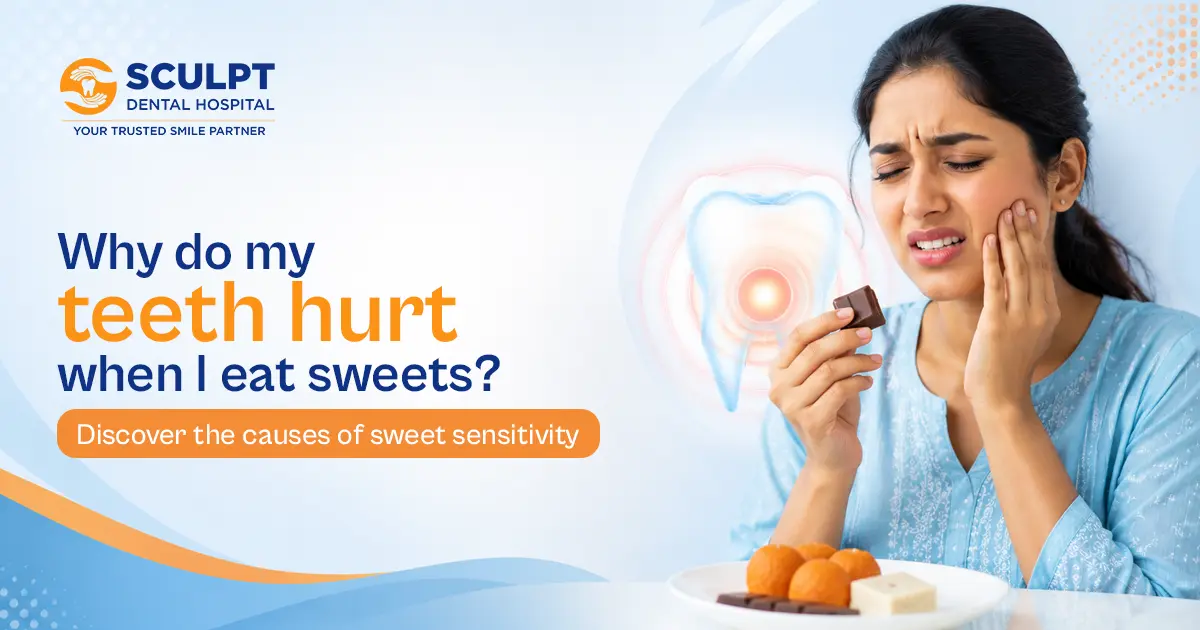
Your tooth may hurt when you eat sweets because of tooth decay, enamel erosion, exposed dentin, gum recession or a damaged filling. Sugary foods can trigger sharp sensitivity when a tooth’s protective layers are weakened. If the pain is persistent or affects one specific tooth, a dental examination is important.
Have you ever experienced a sudden, sharp pain while eating chocolate, sweets, cake or ice cream? While the discomfort may disappear quickly, it could indicate an underlying dental problem.
Tooth sensitivity to sweets is relatively common, but repeatedly experiencing pain should not be ignored.
If you are looking for the Best Dental Hospital in Chennai, understanding why your teeth react to sugary foods can help you identify when professional dental care is necessary.
Why do my teeth hurt when I eat something sweet?
Healthy tooth enamel protects the sensitive tissues inside your teeth. Beneath the enamel lies dentin, which contains microscopic tubules that communicate with the tooth’s nerve.
When enamel becomes damaged or dentin is exposed, sweet foods may trigger discomfort through changes in fluid movement inside these tubules.
Tooth decay can also expose sensitive structures, causing pain when sugar comes into contact with the affected area.
The discomfort may feel like:
- A sudden, sharp sensation while eating sweets.
- Sensitivity after drinking sweetened beverages.
- Pain concentrated in one tooth.
- Discomfort that disappears after a few seconds.
- Lingering pain after eating sugary foods.
The duration and severity of these symptoms can help your dentist determine their possible cause.
What are the common causes of tooth pain when eating sweets?
Several dental conditions can make your teeth sensitive to sugar.
1. Tooth decay and cavities
Tooth decay is one of the most common reasons for sensitivity to sweets.
Bacteria in dental plaque feed on sugars and produce acids that gradually damage tooth enamel.
As decay progresses, the underlying dentin can become exposed, leading to sensitivity.
Common signs include visible holes, dark spots, pain while chewing and sensitivity to hot, cold or sweet foods.
When detected early, cavities can often be restored with Tooth-Colored Fillings in Chennai, helping protect the remaining tooth structure.
2. Enamel erosion
Enamel is the hard outer layer that protects your teeth.
Frequent exposure to acidic drinks, sour candies and certain dietary acids can gradually weaken and dissolve enamel.
As the enamel becomes thinner, the underlying dentin may become more sensitive.
According to the American Dental Association’s guidance on dental erosion, acidic foods and beverages can contribute to the loss of dental hard tissue.
Once significant enamel structure is lost, it cannot naturally grow back.
3. Gum recession
Gum recession occurs when gum tissue moves away from the tooth, exposing part of its root.
Unlike tooth crowns, root surfaces are not covered by enamel.
As a result, exposed roots may respond more strongly to sweet, cold or acidic foods.
If you notice that your teeth appear longer or your gumline has changed, arrange a dental examination.
4. Cracked or damaged teeth
Small cracks can allow external stimuli to affect the sensitive tissues inside a tooth.
A cracked tooth may cause discomfort while eating sweets, chewing or consuming cold drinks.
Although the pain may come and go, the crack itself does not heal naturally.
5. Worn or loose dental fillings
Older fillings can sometimes become worn, cracked or loose.
When a restoration no longer seals the tooth properly, sensitive tooth structures may become exposed.
This can lead to discomfort when eating sugary foods.
A dentist can examine the existing filling and determine whether repair or replacement is necessary.
6. Dental pulp inflammation
Deep cavities or dental injuries can cause inflammation in the pulp, the soft tissue containing nerves and blood vessels.
In mild cases, the pulp may recover after appropriate treatment.
However, severe or irreversible pulp inflammation can cause persistent pain.
When the pulp is irreversibly inflamed or infected, Root Canal Therapy in Chennai may be recommended to preserve the natural tooth.
Does tooth pain when eating sweets mean I have a cavity?
Not necessarily. Sweet sensitivity can be caused by cavities, exposed dentin, enamel erosion, gum recession or damaged restorations.
The pattern of discomfort may provide useful clues.
| Symptom | Possible cause |
| Sharp pain that disappears quickly | Exposed dentin or sensitivity |
| Pain concentrated in one tooth | Cavity, crack or damaged filling |
| Sensitivity affecting several teeth | Enamel wear or gum recession |
| Lingering pain after eating sweets | Possible pulp inflammation |
| Pain with swelling or fever | Possible dental infection |
These symptoms are not enough to confirm a diagnosis. A dentist may recommend a clinical examination and dental X-rays when necessary.
How can I stop my teeth from hurting when I eat sweets?
Certain home-care measures can help reduce tooth sensitivity temporarily.
1. Use desensitizing toothpaste
Toothpaste designed for sensitive teeth may help reduce discomfort by blocking sensitivity pathways or reducing nerve responses.
Regular use is often necessary before improvement becomes noticeable.
2. Brush with fluoride toothpaste
Fluoride helps strengthen tooth enamel and supports the remineralization of early enamel damage.
Brush twice daily using a soft-bristled toothbrush and fluoride toothpaste.
Avoid brushing aggressively, as excessive pressure can contribute to gum recession and tooth wear.
3. Limit sugary foods and drinks
Frequent consumption of sweets increases the number of acid attacks on your teeth.
Reduce between-meal sugary snacks and avoid sipping sweetened beverages throughout the day.
4. Rinse your mouth with water
Drinking or rinsing with plain water after eating sweets can help remove food particles and reduce sugar remaining in the mouth.
This does not replace brushing or professional dental care.
5. Avoid acidic foods that increase sensitivity
Sour candies, fizzy drinks and highly acidic beverages may aggravate existing enamel erosion.
After acidic foods or drinks, rinse with water and avoid brushing immediately.
6. Schedule a dental examination
If sensitivity continues or repeatedly affects the same tooth, professional assessment is important.
Through General Dentistry in Chennai, patients can receive dental examinations and advice about appropriate treatment for cavities, sensitivity and other oral health concerns.
Can sugar sensitivity go away on its own?
Mild sensitivity may improve with desensitizing toothpaste, fluoride use and changes in oral hygiene habits.
However, sensitivity caused by established cavities, cracked teeth or damaged fillings generally requires professional treatment.
According to the NHS guidance on tooth decay, tooth decay may cause sharp pain when eating or drinking hot, cold or sweet foods.
A cavity that has developed a hole in the tooth cannot repair itself naturally.
Therefore, recurring sugar sensitivity should not be ignored simply because the discomfort disappears after eating.
For additional information, read our previous blog, Why Does My Tooth Hurt Without a Cavity?.
When should you see a dentist for sweet sensitivity?
Occasional brief sensitivity may not always indicate a serious problem.
However, you should arrange a dental examination if:
- Pain occurs every time you eat sweets.
- Sensitivity becomes more severe.
- One particular tooth repeatedly hurts.
- Discomfort continues after the food is removed.
- You notice visible cavities or damaged fillings.
- Pain occurs while chewing.
- Tooth sensitivity affects your daily eating habits.
Seek prompt dental care for severe or persistent pain, fever, gum swelling or a suspected dental infection.
Difficulty breathing or swallowing with facial swelling requires emergency medical attention.
You can also explore our previous blog, How Can I Stop Tooth Pain Immediately?, for temporary toothache relief methods.
How do dentists treat tooth sensitivity to sweets?
Treatment depends on the underlying dental condition.
Fluoride treatment: Professional fluoride applications may help strengthen enamel and reduce certain types of sensitivity.
Desensitizing products: Special toothpastes or professionally applied agents can help manage exposed dentin sensitivity.
Dental fillings: Cavities can be restored with suitable materials to protect damaged tooth structure.
Dental crowns: Severely weakened or damaged teeth may require crowns for additional protection.
Root canal treatment: When the pulp is irreversibly inflamed or infected, root canal treatment may be necessary.
Gum treatment: Appropriate periodontal care may be recommended when gum disease or recession contributes to sensitivity.
Early diagnosis helps identify the most suitable approach while preserving healthy tooth structure.
How can you prevent tooth sensitivity when eating sweets?
Maintaining good oral hygiene can reduce the likelihood of tooth decay and sensitivity.
Follow these preventive habits:
- Brush twice daily with fluoride toothpaste.
- Clean between your teeth every day.
- Reduce frequent sugary snacks.
- Limit acidic drinks and sour candies.
- Use a soft-bristled toothbrush.
- Avoid grinding or clenching your teeth.
- Attend regular dental check-ups.
- Seek early treatment for cavities.
To understand other sensitivity triggers, read our related article, Why Is My Tooth Hurting More During Season Changes?.
Why choose Sculpt Dental Hospital for Tooth Sensitivity Treatment in Chennai?
Recurring tooth sensitivity can make eating everyday foods uncomfortable.
Sculpt Dental Hospital, located in Anna Nagar, Chennai, offers dental examinations and treatments for tooth decay, damaged restorations, sensitivity and other oral health concerns.
Patients searching for the Best Dental Hospital in Chennai should consider factors such as professional qualifications, accurate diagnosis, available treatment options and patient-centered care.
At Sculpt Dental Hospital, patients can explore treatment options including dental fillings, preventive dental care and root canal therapy when clinically necessary.
Early examination can help identify the cause of sensitivity before a dental problem becomes more complicated.
Frequently Asked Questions
1. Why does my tooth hurt only when I eat chocolate?
Chocolate contains sugar, which may trigger discomfort when dentin is exposed or a tooth has decay. Temperature may also contribute if the chocolate is very cold.
2. Does tooth sensitivity to sweets always mean a cavity?
No. Enamel erosion, gum recession, exposed dentin and damaged fillings can also cause sweet sensitivity.
3. Can sensitive teeth heal naturally?
Mild sensitivity may improve with appropriate oral care. However, cavities, cracks and significant enamel loss generally require dental treatment.
4. Why does only one tooth hurt when I eat sweets?
Pain limited to one tooth may indicate localized decay, a crack, exposed dentin or a defective filling.
5. Can fluoride toothpaste stop sugar sensitivity?
Fluoride toothpaste can support enamel health and may help with sensitivity, but it cannot repair established cavities or significant structural damage.
6. When should I worry about tooth pain after eating sweets?
Seek dental advice when pain is persistent, worsening, lingering after eating or accompanied by swelling or other concerning symptoms.
7. Where can I get treatment for sweet tooth sensitivity in Chennai?
Sculpt Dental Hospital in Anna Nagar, Chennai, provides dental examinations and treatment options for tooth sensitivity, cavities and related dental conditions.
Conclusion
Tooth pain when eating sweets is often associated with exposed dentin, cavities, enamel erosion or other dental problems. Although mild sensitivity may improve with proper oral care, recurring discomfort should not be ignored.
Early dental evaluation can help identify the cause and prevent further tooth damage.
If you are looking for the Best Dental Hospital in Chennai, Sculpt Dental Hospital in Anna Nagar provides dental consultations and treatment options for managing tooth sensitivity and protecting oral health.
Book a Dental Consultation at Sculpt Dental Hospital and enjoy your favorite foods with greater comfort.