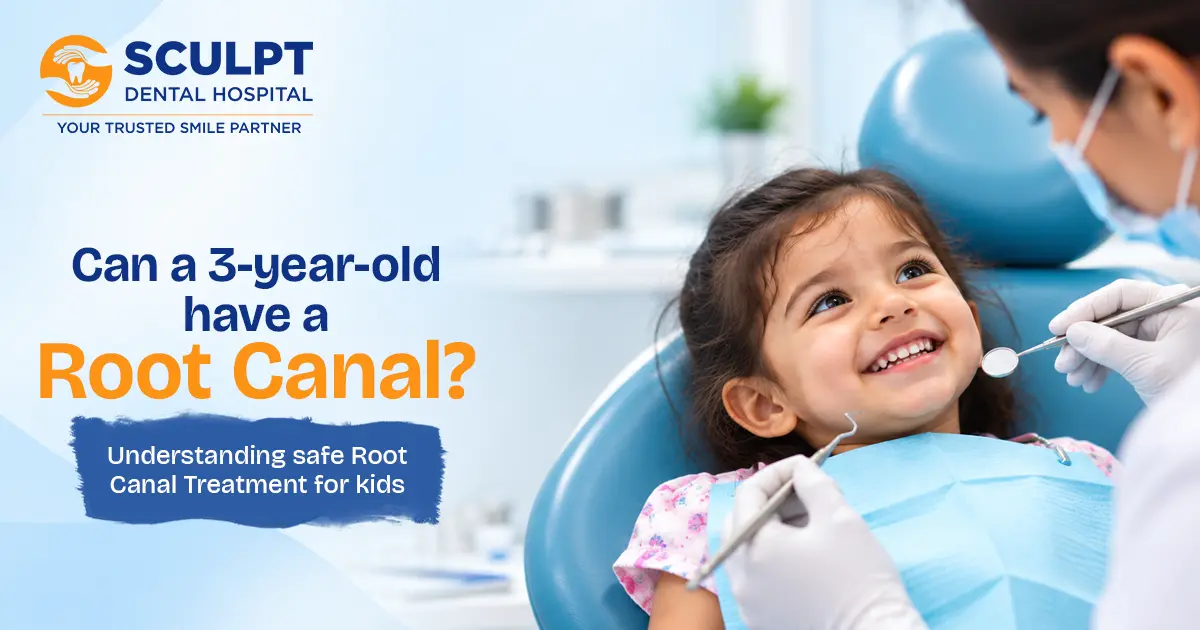
Yes, a 3-year-old can have a root canal if a baby tooth is severely infected or damaged. However, the treatment is different from a conventional adult root canal. Pediatric dentists may recommend a procedure called a pulpectomy to remove infected tissue and preserve the baby tooth until it naturally falls out.
Many parents worry when their toddler experiences severe tooth pain or develops cavities. They often wonder whether root canal treatment is necessary at such a young age.
If you are considering Root Canal Treatment in Chennai for your child, understanding the available treatment options can help you make an informed decision.
Why would a 3-year-old need a Root Canal?
Children as young as three can develop deep cavities that reach the soft tissue or pulp, inside their teeth. When this tissue becomes severely inflamed or infected, professional dental treatment may be necessary.
Common reasons include:
- Severe tooth decay: Untreated cavities can reach the pulp and cause infection.
- Dental injuries: Falls or accidents can damage the inner tissue of a baby tooth.
- Persistent toothache: Frequent or prolonged pain may indicate pulp inflammation.
- Swelling or abscess: Swollen gums or pus near a tooth may signal infection.
- Tooth discoloration: A darkened tooth following an injury may require evaluation.
Not every cavity requires root canal treatment. A pediatric dentist will examine the tooth and may recommend a dental X-ray to determine the most suitable approach.
For specialized evaluation, parents can explore Pediatric Dentistry in Chennai at Sculpt Dental Hospital.
Is Root Canal Treatment safe for a 3-Year-Old?
Root canal-related procedures can be safe and appropriate for a 3-year-old when performed by a qualified dental professional after a thorough examination.
The decision depends on the child’s dental condition, the extent of infection, the tooth’s root development and the child’s ability to cooperate during treatment.
Pediatric dentists use age-appropriate techniques and local anesthesia to help reduce discomfort. In certain situations, sedation or other behavior-management options may be considered following an individual safety assessment.
According to the American Academy of Pediatric Dentistry’s pulp therapy recommendations, treatment for baby teeth should be selected according to the health of the pulp and the condition of the tooth.
What type of Root Canal is done for a 3-year-old?
Root canal procedures for baby teeth generally fall into two categories: pulpotomy and pulpectomy.
1. Pulpotomy – Partial Pulp Treatment
A pulpotomy is performed when the pulp inside the crown of the tooth is affected but the remaining root pulp is healthy enough to preserve.
During this procedure, the dentist removes the affected pulp from the upper portion of the tooth, places an appropriate dental material and restores the tooth.
2. Pulpectomy – Root Canal Treatment for Baby Teeth
A pulpectomy involves removing the pulp tissue from both the crown and root canals of a baby tooth.
The dentist cleans the canals and fills them with a material designed for primary teeth. Unlike many adult root canal materials, the filling should accommodate the natural resorption of baby tooth roots.
This procedure may help preserve a restorable baby tooth until it is ready to fall out naturally.
Learn more about the procedure on Sculpt Dental Hospital’s Pulpectomy Treatment in Chennai service page.
What happens during Root Canal Treatment for a 3-year-old?
If a pediatric dentist recommends a pulpectomy, the procedure generally involves the following steps.
Step 1: Dental Examination
The dentist examines the affected tooth and may take an X-ray to assess the extent of infection, root condition and surrounding structures.
Step 2: Local Anesthesia
The treatment area is numbed to minimize discomfort. The dentist also uses suitable techniques to help the child remain calm.
Step 3: Removal of Infected Pulp
The damaged or infected pulp tissue is carefully removed from the tooth.
Step 4: Cleaning and Filling
The root canals are cleaned and filled with a suitable material intended for baby teeth.
Step 5: Tooth Restoration
A filling or crown may be placed to protect the treated tooth and restore its function.
Step 6: Follow-Up
Regular dental reviews help monitor healing and confirm that the tooth remains healthy.
Parents who want to understand root canal procedures in more detail can visit the Root Canal Treatment in Chennai service page.
Why is it important to save baby teeth?
Some parents assume that damaged baby teeth should simply be removed because they will eventually fall out.
However, baby teeth have several important functions:
- Helping children chew food properly.
- Supporting speech development.
- Maintaining space for permanent teeth.
- Guiding the eruption of adult teeth.
- Supporting normal jaw and dental development.
Premature tooth loss can sometimes cause neighboring teeth to shift, potentially affecting the space available for permanent teeth.
Therefore, preserving a baby tooth may be beneficial when it is clinically appropriate.
Is tooth extraction better than a Root Canal for a toddler?
Not necessarily. The best treatment depends on the condition of the tooth.
A pulpectomy may be considered when the tooth is restorable, the roots are suitable for treatment and preserving it is beneficial.
Extraction may be recommended when a tooth is severely damaged, cannot be restored, has unsuitable root conditions or presents an infection that cannot be managed predictably with pulp therapy.
The American Academy of Pediatric Dentistry’s guidance on non-vital pulp therapy explains how the condition of a primary tooth influences the choice of treatment.
A dentist may also assess whether a space maintainer is necessary following an early extraction.
How can parents prevent Root Canal Treatment in young children?
Preventing severe tooth decay is one of the best ways to reduce the likelihood of complex dental procedures.
Parents can protect their toddler’s teeth by:
- Brushing twice daily with a fluoride toothpaste appropriate for the child’s age.
- Using a pea-sized amount of fluoride toothpaste for children aged three to six, with adult supervision.
- Limiting frequent sugary snacks and drinks.
- Avoiding bedtime bottles containing milk or sugary liquids after brushing.
- Scheduling regular pediatric dental check-ups.
- Seeking early treatment for cavities, tooth injuries and persistent pain.
Parents can also read our previous article, What Age Should My Child First Visit a Dentist in Chennai?, to understand the importance of early dental visits.
For additional information about childhood toothaches, explore Why Does My Child Have Tooth Pain at Night?.
When should you take your 3-year-old to a dentist?
Schedule a prompt dental examination if your child develops:
- Persistent or worsening tooth pain.
- Pain that interrupts sleep.
- Swelling around a tooth.
- A visible hole or deep cavity.
- A pimple-like swelling on the gums.
- Difficulty chewing because of tooth pain.
Facial swelling, fever or signs of spreading infection require urgent dental assessment. Difficulty breathing or swallowing requires emergency medical attention.
Early examination can help determine whether a filling, pulp treatment or extraction is necessary.
Why choose Sculpt Dental Hospital for Pediatric Dental Care in Chennai?
At Sculpt Dental Hospital in Anna Nagar, Chennai, dental care for children focuses on early diagnosis, preventive treatment and age-appropriate management of dental problems.
The hospital offers pediatric dental services, including the assessment and treatment of childhood cavities and infected baby teeth.
Parents seeking Root Canal Treatment in Chennai for their children can consult the dental team to understand whether a pulpotomy, pulpectomy or another treatment is appropriate.
The goal is to address discomfort, manage infection and preserve natural teeth whenever clinically possible.
Frequently Asked Questions
1. Can a 3-year-old really need a root canal?
Yes. A 3-year-old may need a pulpectomy if a baby tooth has severe pulp infection or damage and the tooth can be saved.
2. Is a root canal painful for a 3-year-old?
Local anesthesia is used to reduce pain during treatment. Some temporary discomfort afterward is possible, but the dentist can provide age-appropriate aftercare instructions.
3. How long does a root canal take for a toddler?
The duration varies depending on the affected tooth, the complexity of treatment and the child’s cooperation. Some cases can be treated in one visit, while others require additional appointments.
4. Can an infected baby tooth heal without a root canal?
Minor dental problems may respond to less invasive treatment. However, an infected or necrotic pulp generally requires professional intervention and will not reliably heal through home remedies alone.
5. Will a baby tooth root canal affect permanent teeth?
An appropriately performed pulpectomy is designed to preserve the baby tooth while allowing normal development and eruption of its permanent successor. Regular follow-up is important.
6. What is the difference between a pulpotomy and a pulpectomy?
A pulpotomy removes affected pulp from the crown while preserving suitable root pulp. A pulpectomy removes pulp tissue from both the crown and root canals.
7. Where can I get root canal treatment for children in Chennai?
Parents can visit Sculpt Dental Hospital in Anna Nagar, Chennai, for pediatric dental evaluation and advice about suitable treatment options for infected baby teeth.
Conclusion
A 3-year-old can have a root canal-related procedure when it is clinically necessary. Depending on the condition of the baby tooth, a pediatric dentist may recommend a pulpotomy, pulpectomy or another appropriate treatment.
Baby teeth are important for chewing, speech and the development of permanent teeth. Addressing severe cavities and infections early can help protect a child’s oral health.
If your child is experiencing persistent tooth pain, swelling or deep cavities, consult Sculpt Dental Hospital for a pediatric dental examination.
For parents looking for Root Canal Treatment in Chennai, an early professional assessment is the first step toward choosing the safest and most suitable treatment.
Book a pediatric dental consultation at Sculpt Dental Hospital in Anna Nagar, Chennai.