
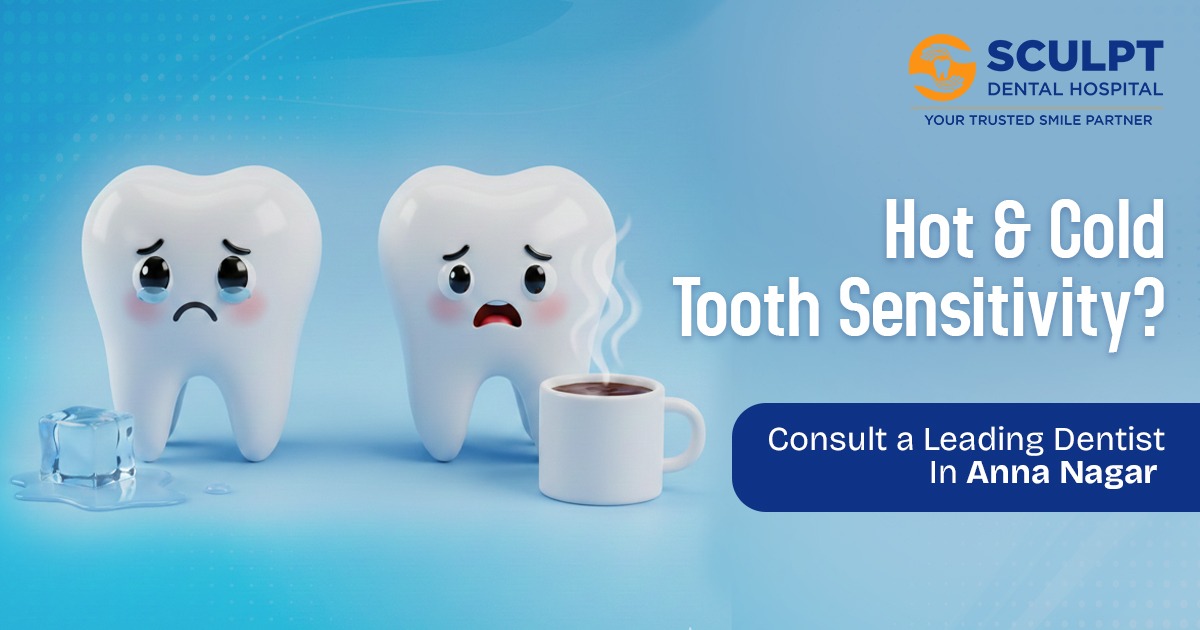
Do you feel a sharp, sudden pain when you sip hot coffee or enjoy a scoop of ice cream? Tooth sensitivity to hot and cold is a common dental concern that affects people of all ages. This discomfort usually occurs when the protective enamel layer wears down, exposing the inner layer of the tooth (dentin), which contains tiny nerve endings. Seeking timely care from a Leading Dentist In Anna Nagar can help identify the exact cause and prevent the condition from worsening. Early diagnosis and proper treatment can significantly reduce sensitivity and restore your comfort while eating and drinking.
Why Does Enamel Wear Down?
Tooth enamel can weaken over time due to several reasons:
- Aggressive brushing
- Using hard-bristled toothbrushes
- Acidic foods and beverages
- Teeth grinding (bruxism)
- Natural aging
When enamel erodes, the dentin underneath becomes exposed, leading to sensitivity. Consulting a Leading Dentist In Anna Nagar ensures that enamel damage is assessed properly and managed effectively.
Can Gum Recession Cause Sensitivity?
Yes, gum recession is another major cause of tooth sensitivity. When gums pull away from the teeth, the roots become exposed. Unlike enamel, tooth roots do not have a protective layer, making them more sensitive to temperature changes.
Common causes of gum recession include:
- Gum disease
- Poor oral hygiene
- Smoking
- Hormonal changes
- Excessive brushing pressure
Professional evaluation by a Leading Dentist In Anna Nagar can help treat gum issues before they lead to severe discomfort.
Are Cavities or Cracked Teeth Responsible?
Sometimes, sensitivity may indicate underlying dental problems such as:
- Cavities
- Cracked or chipped teeth
- Worn fillings
- Dental infections
These conditions expose the inner tooth structure and irritate the nerves. Immediate attention prevents complications and preserves tooth health.
How Can You Reduce Tooth Sensitivity?
You can manage mild sensitivity with simple steps:
- Use desensitizing toothpaste
- Brush gently with a soft-bristled brush
- Avoid acidic foods
- Maintain good oral hygiene
- Visit your dentist regularly
Professional treatments may include fluoride application, dental bonding or gum treatment, depending on the severity.
Frequently Asked Questions
Is tooth sensitivity permanent?
Not always. With proper treatment and care, sensitivity can be reduced or completely resolved.
Can whitening treatments cause sensitivity?
Yes, some whitening products may temporarily increase sensitivity.
How long does tooth sensitivity last?
It depends on the cause. Minor sensitivity may improve within days, while other cases require dental treatment.
Should I stop eating cold foods completely?
Not necessarily. It’s better to identify and treat the root cause instead of avoiding certain foods permanently.
When should I see a dentist for sensitivity?
If the pain is persistent, severe or worsening, consult a dentist immediately.
Conclusion
Tooth sensitivity to hot and cold is often a sign that your teeth need attention. Whether caused by enamel erosion, gum recession, cavities or cracked teeth, early diagnosis is key to preventing further damage. If you are experiencing discomfort, consulting a Leading Dentist In Anna Nagar can help determine the underlying issue and provide personalized treatment.
Experience expert dental care and lasting relief at Sculpt Dental Hospital. Book your appointment today at Sculpt Dental Hospital and protect your smile with confidence.