
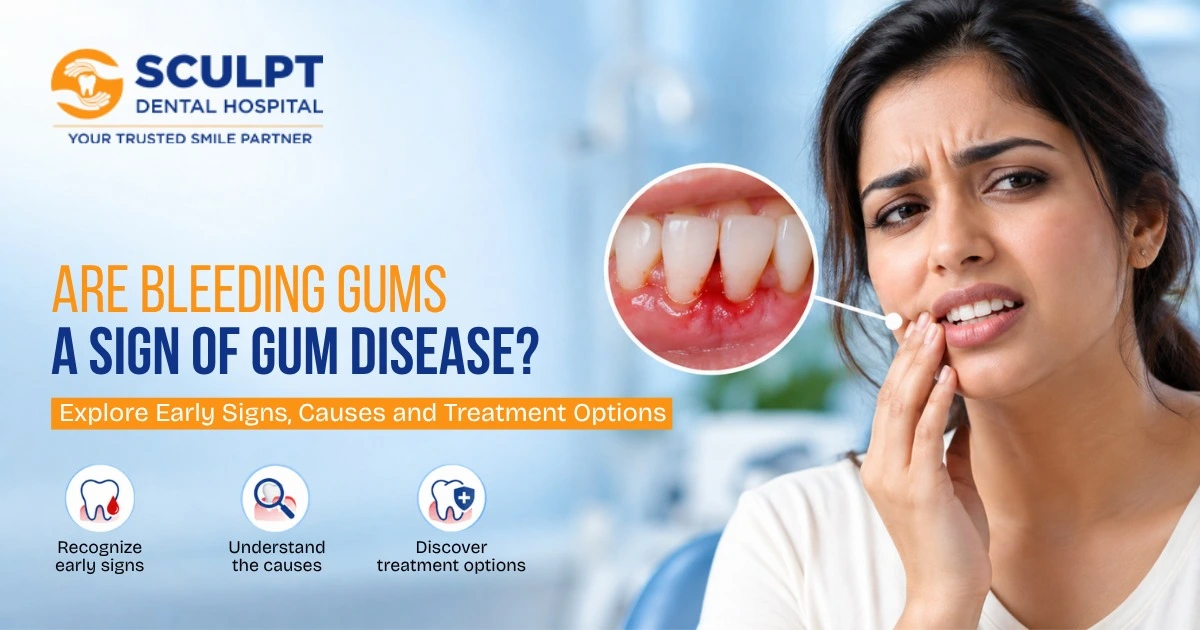
Yes. Bleeding gums are often an early sign of gum disease, particularly gingivitis. Plaque collecting around the gumline can irritate the gums, causing redness, swelling and bleeding during brushing or flossing. However, gum disease is not the only possible cause. Brushing too hard, starting a new flossing routine, hormonal changes, certain medicines and some health conditions can also contribute.
If your gums bleed repeatedly, bleed without an obvious reason or are accompanied by swelling, bad breath, gum recession or loose teeth, arrange a dental examination. Early-stage gum disease is usually easier to manage than advanced periodontitis.
Why Do Gums Bleed?
Healthy gums generally should not bleed during gentle brushing or flossing. The most common dental reason for bleeding is plaque, a sticky film of bacteria that accumulates on the teeth and along the gumline. If plaque is not removed effectively, it can trigger inflammation known as gingivitis.
Common causes and contributors include:
- Plaque buildup and gingivitis
- Tartar above or below the gumline
- Brushing with excessive pressure or a hard-bristled toothbrush
- Flossing after a long gap, especially when the gums are already inflamed
- Poorly fitting dentures or other appliances
- Smoking or other tobacco use
- Hormonal changes, including during pregnancy
- Diabetes or reduced ability to fight infection
- Medicines that affect bleeding or gum tissue
- Less commonly, nutritional deficiencies or blood-related health conditions
Do not stop prescribed medicine because your gums bleed. Tell both your dentist and prescribing doctor about the symptom so they can advise you safely.
What Is the Difference Between Gingivitis and Periodontitis?
Gingivitis is the earliest stage of gum disease. The gums may appear red or puffy and may bleed easily, but the supporting bone has not yet been damaged. With professional care and consistent oral hygiene, gingivitis can often be reversed.
Periodontitis is a more advanced form of gum disease. Inflammation extends below the gumline and can damage the tissues and bone that support the teeth. Pockets may form between the teeth and gums and teeth can become loose if the condition progresses.
The National Institute of Dental and Craniofacial Research explains that gum disease can begin with swollen, red and bleeding gums. Because early gum disease may cause little or no pain, bleeding can be an important warning sign rather than something to ignore.
Signs That Bleeding May Be Related to Gum Disease
Bleeding is more likely to be associated with gum disease when you also notice one or more of the following:
- Red, swollen or tender gums
- Persistent bad breath or an unpleasant taste
- Gums pulling away from the teeth
- Sensitivity around expo sed tooth roots
- Pus between a tooth and the gum
- Teeth that feel loose or have changed position
- Pain when chewing
- A change in the way your teeth meet
The NHS guide to gum disease also advises having red, swollen, sore or bleeding gums checked by a dentist.
When Should You See a Dentist for Bleeding Gums?
Book a dental appointment if bleeding continues for more than a few days despite gentle, thorough oral care; keeps returning; occurs spontaneously; or comes with swelling, pain, bad breath, recession or loose teeth.
Seek prompt care if you have severe swelling, pus, fever, facial swelling, uncontrolled bleeding, difficulty swallowing or difficulty breathing. These symptoms may need urgent assessment.
If you have diabetes, are pregnant, smoke, take blood-thinning medicine or have a weakened immune system, mention this during your appointment. It helps the dentist assess your risk and plan suitable care.
Related reading: Gum measurements help dentists assess periodontal health. Read Sculpt Dental Hospital’s previous guide, “What Does a Gum Score of 7 Mean? Understanding Gum Health and Treatment”, to understand what a deep gum pocket may indicate.
How Does a Dentist Diagnose the Cause?
A dentist will review your symptoms, oral-care routine, medical history and medicines. The examination may include:
- Checking the gums for redness, swelling, recession and bleeding
- Looking for plaque and hardened tartar
- Measuring the spaces between the teeth and gums with a periodontal probe
- Assessing tooth mobility and the way the teeth bite together
- Taking dental X-rays when bone levels or another problem need evaluation
Bleeding alone cannot show how advanced a condition is. A clinical examination is the most reliable way to distinguish temporary irritation from gingivitis or periodontitis.
How Are Bleeding Gums Treated?
Treatment depends on the cause and severity.
Professional cleaning
If plaque and tartar are causing inflammation, professional scaling can remove deposits that a toothbrush cannot. Learn more about scaling and polishing at Sculpt Dental Hospital.
Deep cleaning
When deposits and inflammation extend below the gumline, a dentist may recommend scaling and root planing. This cleans the root surfaces and helps the gums heal.
Advanced periodontal treatment
Persistent or advanced periodontitis may require targeted periodontal care. Depending on the clinical findings, this can include non-surgical therapy or procedures such as flap treatment or gum grafting. Explore gum-treatment options at Sculpt Dental Hospital.
Management of another cause
If trauma, an appliance, medicine or a medical condition may be contributing, the dentist can adapt the dental plan and, when appropriate, recommend that you speak with your doctor. Never change prescription medicines without medical guidance.
What Can You Do at Home?
Home care supports gum health, but it does not remove hardened tartar or replace a dental examination.
- Brush twice daily for two minutes using fluoride toothpaste and a soft-bristled toothbrush.
- Angle the bristles gently toward the gumline; avoid forceful scrubbing.
- Clean between the teeth daily with floss or an interdental brush suited to the space.
- Replace a worn toothbrush or brush head.
- Avoid smoking and tobacco.
- Follow the review and cleaning schedule recommended for your individual risk.
Do not avoid the bleeding area completely. Gentle cleaning helps remove plaque, although persistent or heavy bleeding needs professional assessment.
Can Bleeding Gums Go Away on Their Own?
Bleeding caused by brief irritation may settle, but recurring bleeding should not be assumed to be harmless. If plaque-induced gingivitis is the cause, better daily cleaning can reduce inflammation, yet professional cleaning may still be needed when tartar is present. Advanced gum disease does not resolve through brushing alone.
Why Early Gum Care Matters
Early assessment can identify gingivitis before it progresses and can reveal other causes that need attention. It may also make care simpler and help protect the tissues and bone that keep teeth stable.
For people searching online for the Best Dental Hospital in Chennai, the most useful choice is a dental hospital that offers a thorough periodontal assessment, explains the findings clearly and recommends treatment based on the diagnosis not the keyword alone. Sculpt Dental Hospital provides gum evaluation and treatment in Anna Nagar, Chennai, with care planned around each patient’s needs.
Frequently Asked Questions
Are bleeding gums always a sign of gum disease?
No. Gum disease is a common cause, but vigorous brushing, a recent change in flossing, hormonal changes, medicines and some health conditions may also contribute. Recurring bleeding should be assessed by a dentist.
Is it normal for gums to bleed when flossing?
Occasional bleeding can occur when you restart flossing, especially if the gums are inflamed. It should improve with gentle, consistent cleaning. Continued bleeding needs a dental check-up.
Can gingivitis be reversed?
Gingivitis can often be reversed with professional dental care and effective daily plaque removal because it has not yet caused loss of the supporting bone. A dentist should confirm the diagnosis.
Does bleeding mean I need gum surgery?
Not necessarily. Early gum disease may respond to professional cleaning and improved home care. Surgery is considered only when clinical findings indicate that more advanced treatment is needed.
What happens if gum disease is left untreated?
Gingivitis can progress to periodontitis in some people. Periodontitis can damage the tissues and bone supporting the teeth and may eventually contribute to tooth mobility or tooth loss.
Which dentist should I visit for bleeding gums in Chennai?
Start with a dental hospital or dentist who can perform a full gum assessment and provide or coordinate periodontal treatment. If you are looking for the Best Dental Hospital in Chennai for your needs, consider clinical expertise, diagnostic approach, hygiene standards, treatment options, location and communication not promotional claims alone.
Take the Next Step for Healthier Gums
Blood on your toothbrush or floss is a signal worth checking. A timely examination can identify whether the cause is gingivitis, periodontitis, irritation or another factor.
Concerned about bleeding gums? Contact Sculpt Dental Hospital in Anna Nagar, Chennai, to arrange a gum-health assessment and receive a treatment plan based on your clinical needs. Contact Sculpt Dental Hospital.