
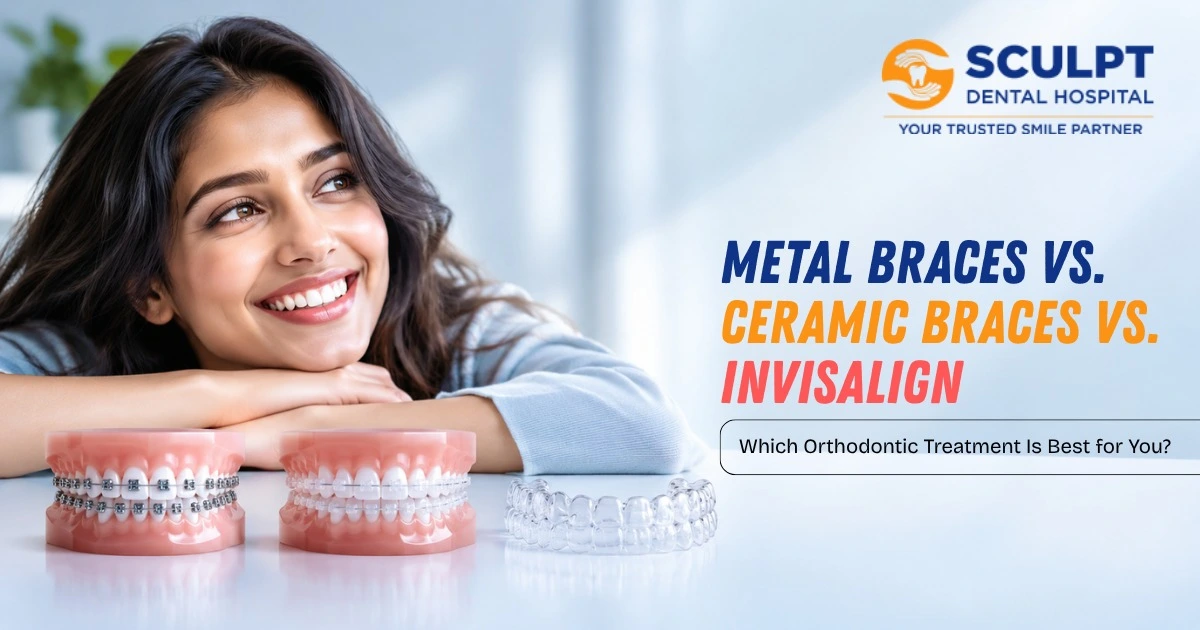
The best orthodontic treatment depends on your bite, the tooth movements required, your age, lifestyle, appearance preferences, oral hygiene and ability to follow instructions. Metal braces are durable and can manage a wide range of orthodontic problems. Ceramic braces offer similar fixed-appliance control with less visible brackets. Invisalign uses removable, nearly transparent aligners and can be a discreet option for suitable patients who can wear them consistently.
There is no single winner for everyone. An orthodontic examination including an assessment of your teeth, gums, bite and jaw relationship is the safest way to choose between metal braces, ceramic braces and Invisalign.
Quick Comparison: Metal Braces, Ceramic Braces or Invisalign?
| Feature | Metal braces | Ceramic braces | Invisalign clear aligners |
| Visibility | Most noticeable | Less noticeable; tooth-coloured or clear brackets | Nearly transparent, but attachments may be visible |
| Appliance type | Fixed | Fixed | Removable |
| Suitable cases | Broad range, including many complex movements | Many of the same cases as metal braces, subject to clinical suitability | Many mild to complex cases, depending on diagnosis and treatment planning |
| Patient compliance | Lower daily compliance because the appliance stays on | Lower daily compliance because the appliance stays on | High; aligners must be worn as prescribed |
| Eating | Food restrictions help protect brackets and wires | Similar restrictions to metal braces | Removed for meals; must be stored safely |
| Cleaning | Requires careful brushing and interdental cleaning | Requires careful cleaning to avoid plaque and staining around brackets | Trays are removed for brushing and flossing |
| Comfort | Temporary soreness; brackets may irritate cheeks initially | Similar adjustment; ceramic brackets may feel slightly bulkier | Smooth trays; temporary pressure and occasional edge irritation are possible |
| Breakage/loss risk | Brackets or wires can break | Ceramic brackets can chip or fracture | Aligners can be lost, damaged or warped |
| Best suited to | Patients prioritising durability, fixed control and value | Patients wanting fixed treatment with a subtler appearance | Patients prioritising discretion and flexibility who can follow the wear schedule |
Treatment time and fees cannot be predicted from the appliance alone. They depend on case complexity, treatment goals, missed visits, appliance care, aligner wear and biological response.
What Are Metal Braces?
Metal braces use stainless-steel brackets attached to the teeth and connected by an archwire. The wire applies controlled forces, while elastics and other components may be used when the bite needs correction.
Advantages of metal braces
- Strong and durable
- Suitable for a broad range of tooth and bite corrections
- Fixed in place, so patients do not need to remember to wear them
- Often more economical than aesthetic orthodontic options
- Coloured elastics can appeal to children and teenagers
Points to consider
- They are the most visible option
- Brackets and wires can initially irritate the lips or cheeks
- Sticky, very hard or chewy foods may damage the appliance
- Cleaning around brackets requires extra care
- A loose bracket or poking wire may need an orthodontic visit
Metal braces may be particularly useful when the orthodontist wants reliable fixed-appliance control or when wearing removable aligners for the required hours may be difficult.
What Are Ceramic Braces?
Ceramic braces work in a similar way to metal braces, but their brackets are clear or tooth-coloured. A tooth-coloured wire may also be available in some situations, although the exact components depend on the treatment plan.
Advantages of ceramic braces
- Less noticeable than conventional metal braces
- Fixed to the teeth, providing continuous treatment without a daily wear decision
- Can treat many orthodontic problems suitable for fixed appliances
- Often preferred by image-conscious teenagers and adults
Points to consider
- Usually cost more than metal braces
- Ceramic brackets may be more brittle than metal brackets
- They may be slightly larger or more noticeable than expected
- Clear elastic ties can stain with certain foods, drinks or tobacco
- They may not be recommended for every bite or tooth position
Ceramic braces can be a useful middle ground for someone who wants fixed treatment but prefers a more discreet appearance.
Related reading: Concerned about discomfort after braces are fitted or adjusted? Read Sculpt Dental Hospital’s previous guide, “Do Dental Braces Hurt? What to Expect During Treatment”.
What Is Invisalign?
Invisalign treatment uses a planned sequence of custom-made clear aligners. Each aligner applies controlled pressure to move selected teeth gradually. Small tooth-coloured attachments may be bonded to some teeth to help produce specific movements and elastics may also be needed.
The American Association of Orthodontists explains that clear aligners are removable trays that apply gentle pressure to reposition teeth. It also notes that aligners are not right for everyone and that some cases are treated more predictably with braces.
Advantages of Invisalign
- Nearly invisible during everyday use
- Removable for eating, brushing and flossing
- No fixed brackets or wires
- Digital planning helps map the intended stages of treatment
- Can fit professional, social and active lifestyles
Points to consider
- Aligners must be worn for the hours prescribed by the treating doctor, commonly around 20–22 hours daily
- Removing them too often can delay or compromise progress
- They must be removed before eating and before drinking anything other than plain water
- Aligners can be misplaced, cracked or warped by heat
- Tooth-coloured attachments may still be visible
- Refinements or additional aligners may be required
People considering Invisalign Treatment in Chennai should choose based on a clinical assessment rather than appearance alone.
Which Option Is Best for Different Priorities?
Choose metal braces when durability and fixed control matter most
Metal braces may be a strong choice for complex crowding, significant bite correction or patients who prefer an appliance that cannot be removed. They may also suit families looking for a dependable and generally cost-conscious fixed option.
Consider ceramic braces when you want discreet fixed treatment
Ceramic braces may suit adults or teenagers who want the continuous action of fixed braces but prefer brackets that blend more closely with the teeth. They require careful cleaning and thoughtful food choices to maintain their appearance.
Consider Invisalign when discretion and removability are priorities
Invisalign may suit a responsible teenager or adult who wants minimal visual impact and can consistently follow the wear schedule. Removability can make meals and oral hygiene easier, but it also makes discipline essential.
Are Metal Braces More Effective Than Ceramic Braces or Invisalign?
Effectiveness depends more on diagnosis, treatment planning, case selection and patient cooperation than on a simple appliance ranking.
Metal and ceramic braces are both fixed systems. They can provide continuous force and precise control, although an orthodontist may prefer metal brackets in situations involving greater force, a higher breakage risk or certain complex movements.
Clear aligners can treat many alignment and bite problems, but their suitability depends on the movements required and the patient’s wear habits. Some patients may need attachments, elastics, refinements or a combined approach. No appliance can guarantee a particular result or completion date.
Which Option Is More Comfortable?
All orthodontic appliances can cause temporary pressure or soreness when treatment begins and after adjustments or aligner changes.
- Metal braces: The teeth may feel tender and brackets or wires may rub at first.
- Ceramic braces: Pressure is similar to metal braces; the brackets may feel slightly bulkier.
- Invisalign: The smooth trays do not have brackets, but new aligners can feel tight and tray edges may occasionally irritate the gums or cheeks.
Comfort is personal and can change during treatment. Severe pain, a broken appliance, persistent ulceration or an aligner that no longer fits properly should be reported to the dental team.
Which Treatment Is Easier to Keep Clean?
Invisalign allows you to remove the trays for brushing and flossing, which can simplify access to the teeth. However, you must clean your teeth before replacing the aligners and keep the trays clean as instructed.
Metal and ceramic braces require brushing carefully above, below and around each bracket. Interdental brushes, floss threaders or other aids may be recommended. With any option, poor plaque control can contribute to tooth decay, gum inflammation or white marks on the teeth.
Do You Need to Avoid Foods?
With metal or ceramic braces, avoid foods that can bend wires or loosen brackets, particularly very hard, sticky or chewy items. Cut firm foods into smaller pieces rather than biting directly into them.
With Invisalign, remove the aligners before eating. Drink only plain water while wearing them unless your treating doctor advises otherwise. Hot drinks can distort aligners, while sugary or acidic drinks trapped under a tray can increase oral-health risks.
How Much Do Metal Braces, Ceramic Braces and Invisalign Cost?
Metal braces are often the most budget-friendly of the three, ceramic braces generally cost more and Invisalign fees vary according to case complexity and the aligner plan required. This is a general comparison not a quotation.
An accurate fee requires an examination, diagnostic records and a treatment plan. When comparing prices, ask what the quote includes: consultations, records, appliances, review visits, refinements, emergency care and retainers.
How Long Does Orthodontic Treatment Take?
There is no universal timeline. Treatment may take months or several years depending on crowding, spacing, bite correction, jaw growth, extractions, missed appointments, breakages and aligner wear. A seemingly discreet or premium appliance is not automatically faster.
After active treatment, most patients need retainers to reduce unwanted tooth movement. Retainer wear is part of maintaining the result, whichever appliance you choose.
How Will an Orthodontist Help You Decide?
Before recommending treatment, the clinician may:
- Examine your teeth, gums, bite and jaw relationship
- Review your dental and medical history
- Take photographs, scans or impressions
- Request X-rays when clinically appropriate
- Discuss the movements required and realistic treatment goals
- Compare suitability, risks, maintenance, estimated duration and fees
If you are researching Dental Braces in Anna Nagar, look for an assessment that explains why a particular appliance suits your diagnosis, not simply which option is most popular.
Frequently Asked Questions
Which is better: metal braces, ceramic braces or Invisalign?
None is universally better. Metal braces prioritise durability and fixed control, ceramic braces offer a subtler fixed option and Invisalign provides removable, nearly transparent treatment for suitable patients. Your diagnosis and ability to care for the appliance should guide the decision.
Are ceramic braces as effective as metal braces?
Ceramic braces can treat many of the same orthodontic problems as metal braces. However, material properties, bite position and the movements required may make metal brackets preferable in some cases.
Is Invisalign faster than braces?
Not necessarily. Treatment time depends on the orthodontic problem, planned tooth movements and patient cooperation. Consistent aligner wear is essential for progress.
Can Invisalign treat complex cases?
Invisalign can treat a growing range of cases, sometimes with attachments, elastics or additional aligners. Certain movements may be more predictable with fixed braces or a combined approach. A clinical assessment is required.
Which braces are best for teenagers?
Metal braces can be dependable when compliance is a concern. Ceramic braces may appeal to image-conscious teens, while Invisalign can work well for responsible teens who will wear and care for the aligners as instructed.
Which orthodontic option is best for adults?
Adults may be candidates for all three options if their teeth and gums are healthy enough for treatment. The best choice depends on their bite, treatment goals, work and social preferences, hygiene and budget.
Where can I get Dental Braces in Anna Nagar?
Sculpt Dental Hospital offers orthodontic evaluation and dental braces treatment in Anna Nagar, Chennai. The team can compare metal braces, ceramic braces and clear-aligner options after examining your smile and bite.
Where can I enquire about Invisalign Treatment in Chennai?
You can arrange an orthodontic consultation at Sculpt Dental Hospital to learn whether Invisalign is appropriate for your needs. Suitability and treatment details are confirmed only after a clinical assessment.
Find the Orthodontic Option That Fits You
Metal braces, ceramic braces and Invisalign can all create meaningful orthodontic improvements when chosen and managed appropriately. The right answer is the appliance that can safely produce the required movements while fitting your preferences and ability to follow the treatment plan.
Considering Dental Braces in Anna Nagar or Invisalign Treatment in Chennai? Contact Sculpt Dental Hospital for an orthodontic assessment and a personalised comparison of your options. Contact Sculpt Dental Hospital.