
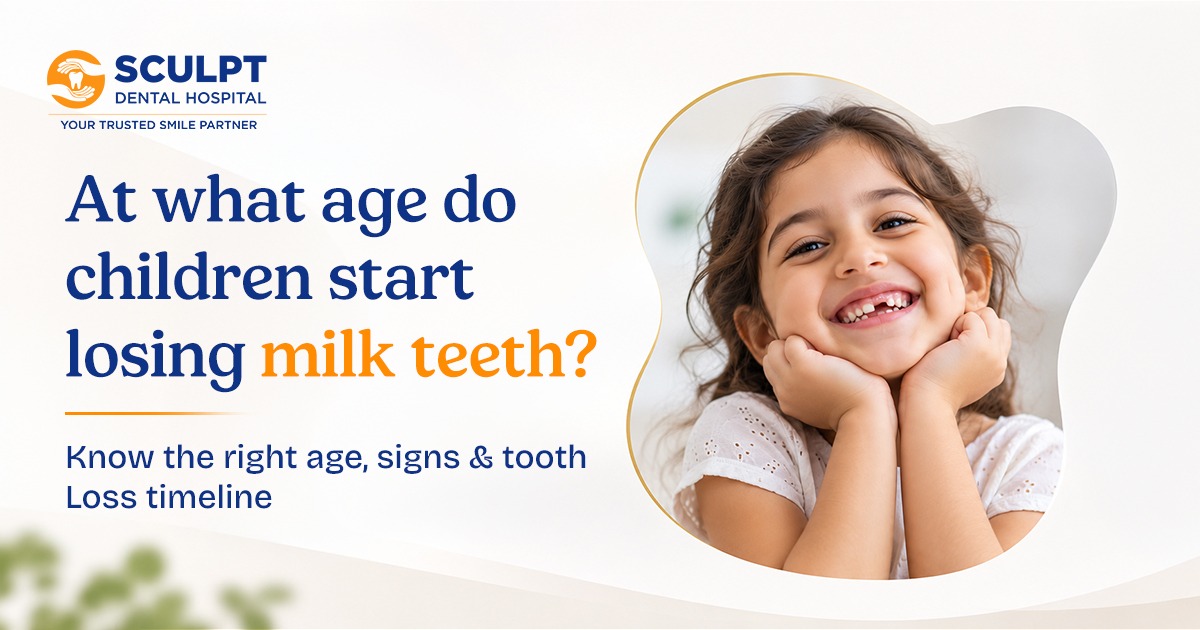
Most children start losing their milk teeth around the age of 6. However, some children may lose their first tooth as early as age 5, while others may begin around age 7. This is a natural stage of dental development as permanent teeth gradually replace primary teeth.
For parents, seeing their child’s first loose tooth can be exciting, but it may also raise questions. Is the tooth falling out too early? Which teeth should fall out first? What happens if a permanent tooth appears before the milk tooth falls out?
Understanding the normal tooth-loss timeline helps parents monitor their child’s dental development. Consulting specialists in Pediatric Dentistry in Chennai can also help identify potential concerns and support healthy permanent tooth development.
Why do children lose their milk teeth?
Milk teeth, also called baby teeth or primary teeth, are the first set of teeth that develop during childhood.
Most children have 20 milk teeth by approximately three years of age. These teeth help children chew food, speak clearly and maintain space for their developing permanent teeth.
As permanent teeth grow underneath the gums, they gradually stimulate the roots of milk teeth to dissolve. This process, called root resorption, makes the milk teeth loose until they eventually fall out.
Losing milk teeth is therefore a normal biological process that allows permanent teeth to emerge.
According to the Indian Dental Association, children generally experience a mixed dentition stage between ages 6 and 12, when both milk teeth and permanent teeth are present.
Which milk teeth fall out first?
The lower front teeth, known as the lower central incisors, are usually the first milk teeth to fall out.
These are generally followed by the upper front teeth. Over the following years, the remaining incisors, canines and molars are gradually replaced.
The order can vary slightly between children and small differences in timing are usually not a cause for concern.
Milk teeth falling out age chart
| Type of Milk Teeth | Approximate Age of Falling Out |
| Central incisors | 6–8 years |
| Lateral incisors | 7–9 years |
| First molars | 9–11 years |
| Canines | 9–12 years |
| Second molars | 10–12 years |
These are general age ranges rather than strict deadlines. Some children develop their permanent teeth earlier or later.
Most children have lost all 20 milk teeth by approximately 12–13 years of age.
What are the signs that milk teeth are ready to fall out?
Children may notice several changes before a milk tooth falls out naturally.
Common signs include:
- A milk tooth becoming loose or wobbly
- Mild discomfort while chewing
- Slight gum tenderness around the tooth
- A permanent tooth becoming visible nearby
- Small changes in spacing between teeth
In most cases, children can continue their normal activities while the tooth gradually loosens.
Encourage your child to gently wiggle the loose tooth using a clean finger or their tongue. Avoid pulling the tooth forcefully, as this may cause unnecessary pain, bleeding or gum injuries.
For more information, read our previous blog, Is It Safe to Remove a Milk Tooth?.
Is it normal for a 5-year-old to lose milk teeth?
Yes, some children begin losing milk teeth at five years old.
Although six is the average starting age, dental development differs from child to child. Factors such as genetics, individual growth patterns and the timing of tooth eruption can influence when milk teeth fall out.
However, losing a milk tooth unusually early may sometimes result from tooth decay, injury or other dental problems.
If a child loses a tooth before age four or a tooth becomes loose following an accident, parents should arrange a dental examination.
What happens if milk teeth fall out too early?
Premature milk tooth loss can sometimes affect the development and alignment of permanent teeth.
Milk teeth act as natural space maintainers. When a tooth falls out much earlier than expected, neighbouring teeth may gradually shift into the empty space.
This can lead to:
- Reduced space for permanent teeth
- Crowding or misalignment
- Changes in the normal tooth eruption pattern
- Difficulty maintaining proper dental alignment
- Potential need for orthodontic treatment
A pediatric dentist may recommend a space maintainer in certain cases to preserve the gap until the permanent tooth is ready to emerge.
Parents can also explore our earlier article, The Importance of Baby Teeth Care: What Every Parent Should Know, to understand why protecting primary teeth is essential.
What if permanent teeth appear before milk teeth fall out?
Sometimes, a permanent tooth begins emerging behind a milk tooth that has not yet fallen out.
This situation is commonly called shark teeth because the child temporarily appears to have two rows of teeth.
It is particularly common around the lower front teeth.
In many cases, the milk tooth eventually falls out naturally, allowing the permanent tooth to move forward.
However, if the milk tooth remains firmly attached, causes discomfort or affects the position of the permanent tooth, a dental examination is recommended.
A pediatric dentist can determine whether observation or treatment is necessary.
How can parents care for their child’s teeth during this stage?
The transition from milk teeth to permanent teeth is an important period for developing healthy oral hygiene habits.
1. Encourage regular brushing
Help your child brush twice daily using fluoride toothpaste and a soft-bristled toothbrush. Children may need brushing supervision until they develop sufficient coordination.
2. Maintain healthy eating habits
Limit frequent sugary snacks and sweetened drinks. Encourage balanced meals that support healthy teeth and gums.
3. Avoid pulling loose teeth forcefully
Allow naturally loose milk teeth to fall out on their own whenever possible.
4. Protect newly emerging permanent teeth
Permanent molars often appear around age six, behind the existing baby molars. These teeth do not replace milk teeth and require careful cleaning.
5. Schedule regular dental checkups
Routine examinations help dentists monitor tooth eruption, detect cavities and assess developing dental alignment.
The American Academy of Pediatrics also provides guidance on children’s tooth-loss milestones and maintaining good dental health during this transition.
When should parents consult a pediatric dentist?
Although losing milk teeth is natural, certain situations require professional attention.
Parents should consult a dentist if:
- A milk tooth falls out unusually early.
- Permanent teeth appear while milk teeth remain firmly attached.
- A child experiences severe pain, swelling or bleeding.
- No milk teeth have started loosening by around age eight.
- Permanent teeth appear crowded or significantly misaligned.
Early dental assessment can help identify developmental concerns and determine whether treatment is required.
Pediatric Dentistry in Chennai at Sculpt Dental Hospital
At Sculpt Dental Hospital, Anna Nagar, Chennai, children’s dental care includes monitoring tooth development, identifying oral health problems and providing preventive treatment.
The dental team can assess loose milk teeth, delayed tooth eruption, cavities and concerns about permanent tooth alignment.
Regular dental consultations help parents understand their child’s changing oral health needs and make informed treatment decisions.
Frequently Asked Questions
1. At what age does the first milk tooth usually fall out?
Most children lose their first milk tooth around age six. The lower front teeth are usually the first to become loose.
2. Is it normal for a 7-year-old to still have milk teeth?
Yes. Children typically continue losing milk teeth until around 12–13 years of age, so having several milk teeth at seven is completely normal.
3. Do all 20 milk teeth fall out?
Yes. All 20 primary teeth are normally replaced by permanent teeth during childhood.
4. Is losing milk teeth painful?
Natural tooth loss usually causes little discomfort. Severe pain, swelling or persistent bleeding should be assessed by a dentist.
5. What happens if milk teeth do not fall out on time?
Delayed tooth loss may result from individual developmental differences or dental conditions. A dentist can examine the teeth and recommend appropriate care.
Conclusion
Children generally start losing milk teeth around the age of six and the process continues until approximately 12–13 years. While the exact timing varies, understanding the normal sequence helps parents monitor their child’s dental development.
Healthy brushing habits, balanced nutrition and regular dental examinations are important during this transition.
If your child experiences delayed tooth loss, premature tooth loss or concerns about permanent tooth eruption, contact Sculpt Dental Hospital, Anna Nagar, for professional Pediatric Dentistry in Chennai and guidance towards a healthy, confident smile.