
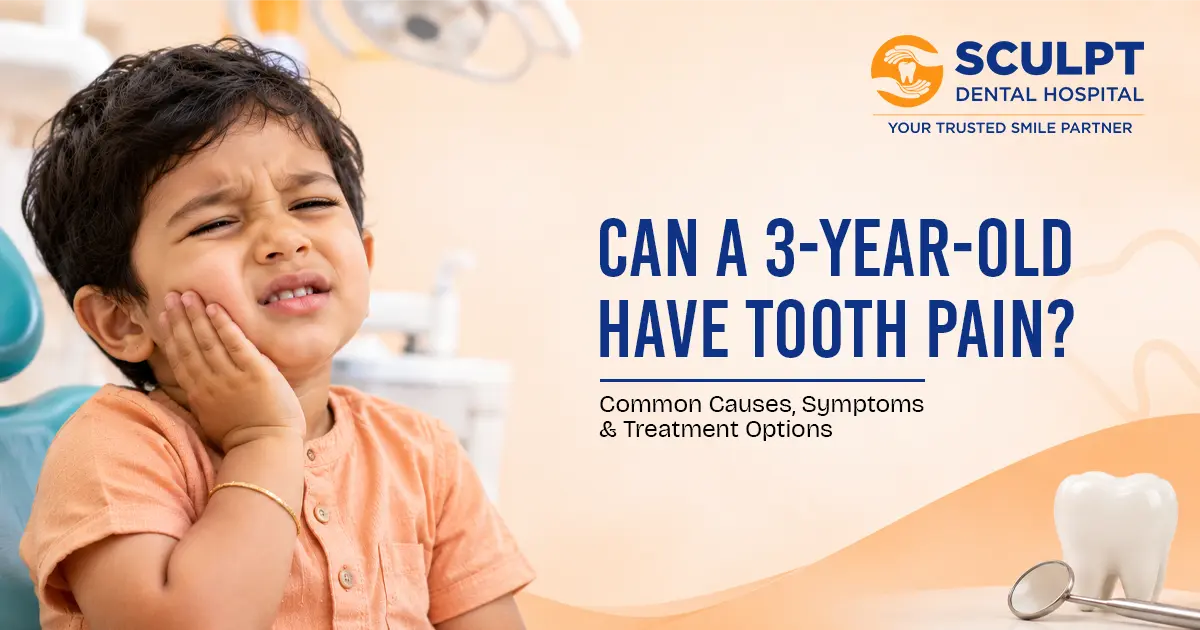
Yes, a 3-year-old can experience tooth pain. Although baby teeth are temporary, they have sensitive nerves and can develop cavities, infections or injuries just like permanent teeth. Tooth pain in toddlers may occur because of tooth decay, gum inflammation, emerging teeth or dental trauma.
For parents, watching a young child struggle with tooth pain can be worrying, especially when the child cannot clearly explain the discomfort.
Understanding the causes, symptoms and treatment options can help parents take appropriate action. If your toddler experiences persistent toothache, consulting a specialist in Pediatric Dentistry in Chennai can help identify the problem and protect your child’s developing smile.
What causes Tooth Pain in a 3-Year-Old?
Tooth pain in toddlers can develop for several reasons. Identifying the underlying cause is essential for providing appropriate treatment.
1. Tooth Decay and Cavities
Tooth decay is one of the most common reasons for tooth pain in young children.
Frequent consumption of sugary snacks, sweetened drinks and inadequate brushing can encourage harmful bacteria to produce acids that damage tooth enamel.
As cavities progress, children may experience sensitivity while eating or drinking. Deep cavities can eventually affect the tooth’s nerve and cause significant pain.
2. Erupting Baby Teeth
By age three, most children have developed their full set of 20 primary teeth. However, some children may still experience discomfort as their second molars finish emerging.
Common symptoms include:
- Tender or swollen gums
- Increased irritability
- Chewing on objects
- Mild discomfort while eating
Persistent or severe pain should not automatically be attributed to teething.
3. Gum Inflammation
Poor oral hygiene may cause plaque to accumulate around the gumline, resulting in irritation and inflammation.
Children with inflamed gums may experience tenderness, redness or bleeding during brushing.
Maintaining proper brushing habits and scheduling dental examinations can help prevent gum-related problems.
4. Dental Injuries
Toddlers are naturally active and may accidentally fall or bump their mouths while playing.
A chipped, cracked or displaced baby tooth can cause discomfort even when the injury is not immediately visible.
If your child experiences tooth pain following an accident, arrange a dental evaluation promptly.
5. Dental Infection or Abscess
Untreated cavities can sometimes develop into infections involving the tooth’s inner tissues.
Symptoms may include severe toothache, swollen gums, fever or a small swelling near the affected tooth.
Dental infections require prompt professional attention because they may spread to surrounding tissues.
How can you tell if your 3-Year-Old has Tooth Pain?
Young children cannot always describe where or why their teeth hurt. Instead, they may communicate discomfort through changes in behaviour.
Watch for these warning signs:
- Crying or becoming unusually irritable
- Refusing favourite foods
- Chewing only on one side
- Waking frequently during the night
- Touching or rubbing the cheek
- Complaining when eating hot or cold foods
- Swollen gums or visible cavities
If these symptoms persist, a pediatric dentist can examine your child’s teeth and determine the cause.
Parents can also explore our previous blog, Why Does My Child Have Tooth Pain at Night?, to understand why dental discomfort sometimes becomes more noticeable during bedtime.
What should parents do when a 3-Year-Old has Tooth Pain?
If your toddler develops a toothache, a few simple measures may provide temporary comfort until a dental appointment.
1. Gently clean the mouth
Use a soft-bristled toothbrush to remove food particles around the affected tooth. Brush carefully without applying excessive pressure.
2. Apply a cold compress
Place a cold compress wrapped in a towel against the outside of your child’s cheek for short intervals to help reduce discomfort and swelling.
3. Offer soft foods
Provide soft, easy-to-chew foods such as curd, porridge or mashed vegetables. Avoid very hot, cold, hard or sugary foods that may worsen sensitivity.
4. Seek professional advice about pain relief
A dentist or pediatrician may recommend age-appropriate pain medication when necessary. Never give aspirin to young children or apply painkillers directly to the gums.
According to the NHS guidance on toothache, dental pain accompanied by swelling or other symptoms requires professional assessment.
Important: Home remedies only provide temporary relief. They cannot treat cavities, dental infections or damaged teeth.
When should you take your child to a Pediatric Dentist?
Parents should arrange a dental appointment when tooth pain continues, repeatedly returns or interferes with eating and sleeping.
Seek urgent dental care if your child develops facial swelling, fever associated with tooth pain or severe discomfort. Difficulty breathing or swallowing requires immediate emergency medical attention.
Early evaluation can prevent minor dental problems from becoming more complicated.
How is Tooth Pain treated in a 3-Year-Old?
Treatment depends on the cause and severity of the problem.
A pediatric dentist may recommend:
- Dental fillings: To restore teeth affected by cavities.
- Pulp therapy: To treat certain baby teeth with damaged or inflamed inner tissues.
- Dental crowns: To protect extensively damaged primary teeth.
- Tooth extraction: When a tooth cannot be safely restored.
- Preventive treatment: Fluoride applications and oral hygiene guidance to reduce future decay.
The American Academy of Pediatric Dentistry recognises the importance of appropriate dental pain management for children.
For a better understanding of treatment options, read our earlier article, What Is the Best Treatment for Cavities in Toddlers?.
How can parents prevent tooth pain in toddlers?
Healthy dental habits introduced early can significantly reduce the risk of tooth decay and discomfort.
Parents should:
- Brush their child’s teeth twice daily using a soft toothbrush.
- Use a rice-grain-sized amount of fluoride toothpaste for children under three and a pea-sized amount from age three.
- Supervise brushing and encourage children to spit out toothpaste.
- Limit sugary snacks and drinks between meals.
- Avoid putting children to bed with bottles containing milk or sweetened beverages.
- Schedule regular dental examinations.
Consistent preventive care helps protect baby teeth and supports healthy permanent tooth development.
Why choose Sculpt Dental Hospital for Pediatric Dentistry in Chennai?
At Sculpt Dental Hospital, Anna Nagar, Chennai, pediatric dental care focuses on identifying oral health concerns early and providing treatment appropriate for each child’s age and needs.
The hospital offers dental assessments, preventive guidance and treatment options for common childhood dental problems, including cavities and tooth pain.
If your three-year-old is experiencing tooth discomfort, scheduling a pediatric dental consultation can help determine the cause and identify suitable treatment.
Frequently Asked Questions
1. Is tooth pain normal for a 3-year-old?
Mild discomfort may occur when the last baby molars erupt. However, persistent toothache is not normal and should be assessed by a dentist.
2. Can a 3-year-old get cavities?
Yes. Children can develop cavities as soon as their first teeth appear. Poor brushing habits, frequent sugar consumption and prolonged exposure to sugary drinks increase the risk.
3. Can baby teeth cause severe pain?
Yes. Baby teeth contain nerves and blood vessels. Deep cavities, infections and injuries can cause significant pain.
4. Should a decayed baby tooth be treated?
Yes. Untreated decay can cause infections, difficulty eating and premature tooth loss. A dentist can recommend appropriate treatment depending on the tooth’s condition.
5. Can tooth pain in toddlers go away on its own?
Some temporary irritation may settle, but pain caused by cavities or infections usually requires dental treatment. Even if the discomfort stops, the underlying problem may remain.
Conclusion
A 3-year-old can certainly experience tooth pain and parents should never ignore persistent dental discomfort. Cavities, gum inflammation, dental injuries and infections are among the possible causes.
Early diagnosis, proper oral hygiene and timely dental treatment can help protect your child’s baby teeth and overall oral health.
If your little one is experiencing toothache, contact Sculpt Dental Hospital, Anna Nagar, Chennai, to arrange a pediatric dental consultation and take the next step towards a healthier smile.