
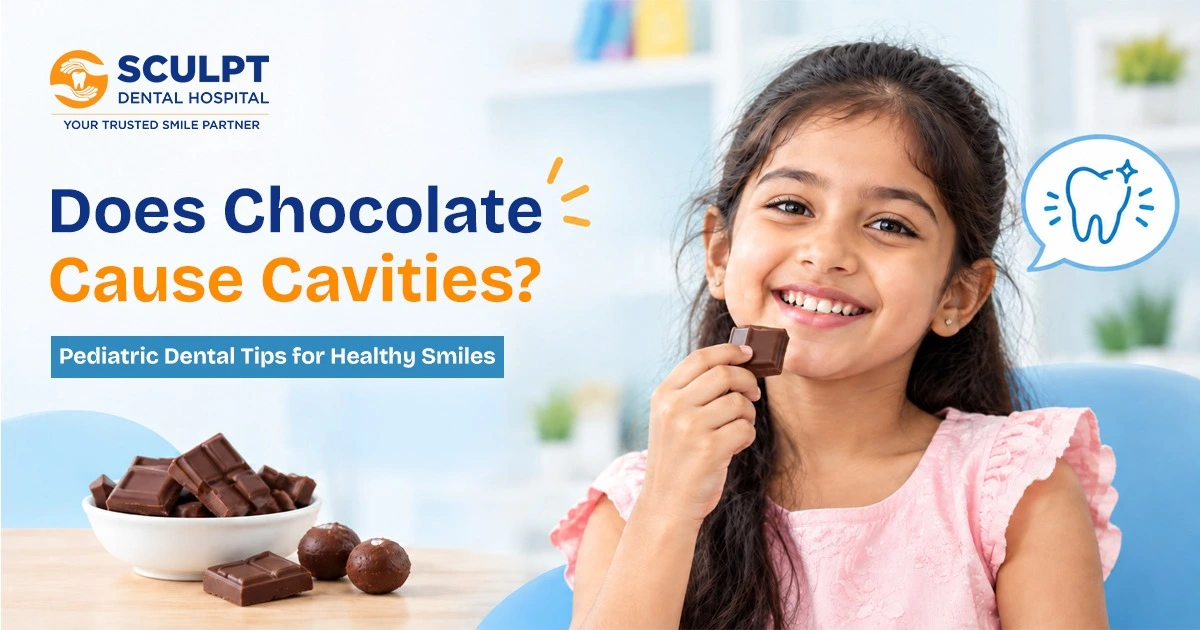
Chocolate does not have to be completely avoided by children, but frequent or prolonged exposure to sugary chocolate can increase the risk of tooth decay. The amount, frequency, type of chocolate and your child’s oral hygiene habits all influence their dental health. With appropriate brushing, healthy eating habits and regular dental check-ups, parents can help children enjoy occasional treats while protecting their smiles.
For parents looking for Pediatric Dentistry in Chennai, understanding the connection between chocolate, sugar and dental cavities can make it easier to build healthy habits early.
Why Does Chocolate Affect Children’s Teeth?
Most chocolates contain added sugar. When a child eats sugary foods, bacteria naturally present in the mouth can use these sugars and produce acids. These acids can attack tooth enamel and over repeated exposure, contribute to dental caries or cavities.
The American Dental Association notes that sugar consumption is associated with an increased risk of dental caries. It also highlights that both diet and nutrition play an important role in oral health.
This does not mean that one piece of chocolate will automatically cause a cavity. The bigger concern is frequent sugar exposure combined with inadequate oral hygiene.
Is All Chocolate Bad for Children’s Teeth?
Not necessarily. Different chocolates can affect teeth differently.
Milk chocolate and many filled chocolates generally contain added sugar. Caramel, toffee and sticky chocolate products may remain around the teeth for longer, increasing the duration of sugar exposure.
Dark chocolate often contains less added sugar than many milk chocolate products, but it can still contain sugar. Therefore, portion size and frequency still matter.
Parents should also check food labels because some chocolate-based snacks and drinks may contain considerable amounts of added sugar.
The American Academy of Pediatric Dentistry recommends limiting children’s sugar consumption because dietary sugar is an important risk factor for dental caries.
How Does Sugar in Chocolate Cause Cavities?
When sugar remains in the mouth oral bacteria metabolize it and produce acids. Repeated acid attacks can weaken the enamel surface.
A simple way to understand the process is:
Chocolate → Sugar exposure → Bacterial activity → Acid production → Enamel damage → Higher cavity risk
The frequency of exposure matters. A child who repeatedly snacks on sugary foods throughout the day may expose their teeth to acids more often than a child who has a small sweet occasionally with a meal.
The AAPD specifically recommends avoiding frequent consumption of sugar-containing foods and drinks as part of preventing early childhood caries.
What Type of Chocolate Is More Concerning?
Some chocolate products may create additional challenges for children’s teeth.
Sticky Chocolate
Chocolate combined with caramel, toffee or other sticky ingredients can remain attached to tooth surfaces and grooves for longer.
Chocolate Snacks
Chocolate-coated biscuits, wafers, cakes and sweetened snacks may contain additional sources of sugar and refined carbohydrates.
Chocolate Drinks
Sweetened chocolate beverages can expose teeth to sugar, particularly when consumed frequently between meals.
Frequent Chocolate Snacking
Having small amounts of chocolate repeatedly throughout the day may create more frequent sugar exposure than having a planned portion occasionally.
For this reason, parents should consider how often their child consumes chocolate rather than focusing only on whether chocolate is completely allowed or prohibited.
How Can Parents Let Children Enjoy Chocolate Safely?
Parents do not necessarily need to completely remove chocolate from a child’s diet. Instead, creating sensible habits can help reduce the potential impact on teeth.
Here are some practical tips:
- Offer chocolate occasionally rather than throughout the day.
- Prefer having sweets around mealtimes instead of frequent snacking.
- Encourage children to drink water after eating chocolate.
- Make sure children brush their teeth twice a day with age-appropriate fluoride toothpaste.
- Help younger children brush effectively rather than expecting them to brush independently.
- Limit sugary drinks and frequent sweet snacks.
- Encourage nutritious snacks such as fruits, vegetables and other nutrient-dense foods.
- Schedule regular dental examinations based on your child’s individual needs.
The AAPD states that brushing twice daily with fluoride toothpaste is an important measure for reducing dental caries in children.
Should Children Brush Immediately After Eating Chocolate?
Children should maintain regular twice-daily brushing rather than repeatedly brushing after every snack.
If your child has eaten chocolate, rinsing the mouth with water can help clear food particles and reduce prolonged sugar exposure. Parents should also maintain a consistent morning and nighttime brushing routine.
For younger children, parents should supervise brushing and use an age-appropriate amount of fluoride toothpaste.
When Should Your Child Visit a Dentist?
Regular dental visits are important even when your child has no obvious toothache.
A dentist can identify early signs of tooth decay, assess cavity risk, provide preventive guidance and help parents understand their child’s individual oral-health needs.
The AAPD recommends establishing a dental home early in childhood, with comprehensive preventive care based on each child’s caries risk.
If you are also concerned about your child’s tooth alignment, you may find our previous guide useful: What Is the Right Age for Children to Get Braces?. Understanding dental development early can help parents recognise when an orthodontic evaluation may be appropriate.
How Can Pediatric Dentistry Help Protect Your Child’s Teeth?
Professional dental care is about more than treating cavities after they develop. Preventive pediatric dental care focuses on identifying risks early and helping children develop healthy oral-health habits.
A pediatric dental evaluation may include:
- Examination for cavities and enamel problems
- Assessment of the child’s cavity risk
- Oral hygiene guidance
- Dietary counselling
- Fluoride-based preventive care when appropriate
- Monitoring dental growth and development
- Guidance for parents on age-appropriate dental care
Choosing Pediatric Dentistry in Chennai can help parents receive professional guidance tailored to their child’s age, dental development, eating habits and oral-health needs.
Frequently Asked Questions
Can children eat chocolate without getting cavities?
Yes. Eating chocolate occasionally does not automatically cause cavities. The risk depends on factors such as frequency of sugar exposure, oral hygiene, overall diet, fluoride exposure and individual cavity risk.
Is dark chocolate better for children’s teeth?
Dark chocolate may contain less sugar than some milk chocolate products, but it can still contain added sugar. Parents should check the nutrition label and focus on moderation and good oral hygiene.
Should children drink water after eating chocolate?
Yes. Drinking water after eating chocolate can help clear food particles and sugar from the mouth. However, water does not replace regular twice-daily brushing with fluoride toothpaste.
How often should children visit the dentist?
The appropriate dental-visit schedule depends on the child’s age, oral health and cavity risk. A dentist can recommend an individualized schedule based on the child’s needs.
What is the best way to prevent cavities in children?
Consistent twice-daily brushing with fluoride toothpaste, limiting frequent sugar exposure, choosing nutritious foods, drinking water and attending regular dental examinations can help reduce the risk of cavities.
Conclusion
Chocolate can be part of a child’s diet when consumed sensibly, but frequent exposure to sugary foods can increase the risk of tooth decay. Parents should focus on moderation, good brushing habits, water consumption, balanced nutrition and regular dental care rather than simply banning chocolate.
If you are concerned about your child’s cavities, oral hygiene, tooth development or overall dental health, Sculpt Dental Hospital can help you understand the right preventive approach for your child.
Looking for professional Pediatric Dentistry in Chennai? Contact Sculpt Dental Hospital to schedule a dental consultation for your child.