
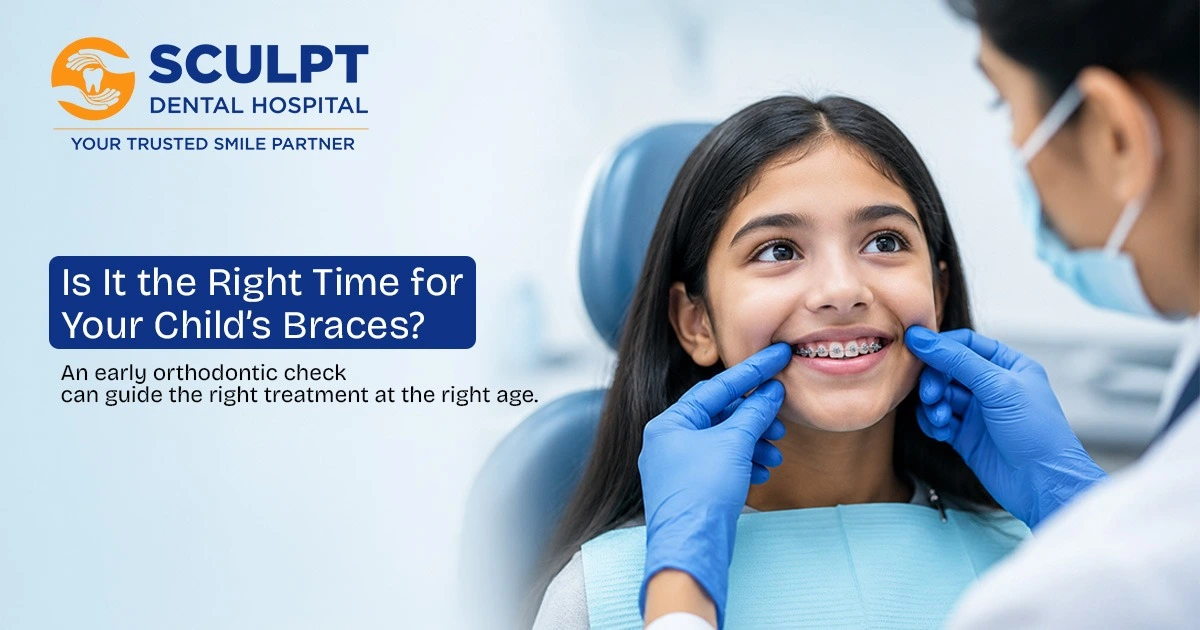
Many parents wonder when their child should get braces. Is age 7 too early? Should they wait until all the permanent teeth come in?The answer is that there is no single right age for every child. An orthodontic evaluation is commonly recommended by around age 7, but many children do not need braces until later, often around ages 9 to 16 depending on their dental development and orthodontic needs.
If you are looking for Pediatric Dentistry in Chennai, understanding the right time for an orthodontic check – up can help you identify developing dental and bite problems early.
What Is the Best Age for Children to Actually Get Braces?
For many children, braces are commonly started after most or all of the permanent teeth have erupted. This often happens around the ages of 11 to 13, although the ideal timing depends on the individual child’s teeth, jaws and stage of development. Some children may need treatment earlier, while others may benefit from waiting until more permanent teeth come through.
The important point is that an orthodontic check up and starting braces are not the same thing.A child may have an evaluation at age 7 but not begin braces until several years later.
When Might a Child Need Early Orthodontic Treatment?
Some orthodontic problems may benefit from treatment while a child is still growing. This is sometimes called early or interceptive orthodontic treatment.
Early treatment is not necessary for every child. It may be considered when a child has a developing issue that could be easier to manage during jaw and facial growth.
For example, an orthodontist may evaluate early treatment for concerns such as:
Severe Crowding
If there is limited space for permanent teeth to erupt, early treatment may sometimes help manage the developing dental arch.
Crossbite
A crossbite occurs when some upper teeth bite inside the lower teeth. An orthodontist may assess whether early treatment is appropriate.
Underbite
When the lower front teeth sit in front of the upper teeth, the child’s jaw growth may need to be evaluated.
Protruding Front Teeth
Prominent front teeth may be more vulnerable to injury and an orthodontist can determine whether early treatment would be helpful.
Jaw Growth Problems
Certain jaw – related concerns may be easier to address while the child is still growing.
Early orthodontic care focuses on identifying and managing specific problems. It does not mean every child should begin braces as soon as possible.
How Do You Know if Your Child May Need Braces?
Parents may notice visible signs, but some orthodontic problems are not obvious without a professional examination.
You may consider scheduling a dental or orthodontic evaluation if your child has:
- Crooked or crowded teeth
- Teeth that protrude significantly
- Difficulty biting or chewing
- Upper and lower teeth that do not meet properly
- Frequent biting of the cheek or roof of the mouth
- Difficulty keeping crowded teeth clean
- Noticeable gaps between teeth
- A jaw that appears to shift to one side while biting
- Permanent teeth erupting in unusual positions
Braces can help correct alignment and bite problems, but treatment should always be based on a professional assessment of the child’s individual needs.
What Happens During a Child’s Orthodontic Evaluation?
A child’s first orthodontic evaluation is generally used to understand how the teeth and jaws are developing.
Depending on the child’s needs, the assessment may include:
- Examination of the teeth and bite
- Evaluation of jaw development
- Assessment of spacing and crowding
- Review of how permanent teeth are erupting
- X – rays, photographs or scans when clinically necessary
After the evaluation, the dental professional may recommend one of three approaches:
- No treatment: The child’s teeth and bite are developing normally.
- Monitoring: The child may need regular check – ups while permanent teeth continue to erupt.
- Early treatment: Treatment may be recommended for a specific developing orthodontic problem.
The timing depends more on the child’s dental development than on a specific birthday.
How Long Do Children Usually Wear Braces?
The duration of orthodontic treatment varies depending on the complexity of the dental or bite problem and the type of treatment required.
According to NHS guidance, treatment commonly lasts from several months to around two and a half years, depending on the individual case. Regular appointments are also needed to monitor and adjust the treatment.
After braces are removed, children may need a retainer to help maintain the new tooth positions.
Why Is Oral Hygiene Important Before and During Braces?
A child should have healthy teeth and gums before starting orthodontic treatment.
Braces can make cleaning more challenging because food and plaque may collect around brackets and wires. Poor oral hygiene can increase the risk of tooth decay and gum problems.
Parents can help children maintain good oral hygiene by encouraging them to:
- Brush thoroughly twice a day
- Clean around brackets and wires carefully
- Follow the dentist’s instructions for additional cleaning methods
- Attend regular dental check – ups
- Limit frequent sugary snacks and drinks
Good oral care is an important part of successful orthodontic treatment.
Choosing Pediatric Dentistry in Chennai for Your Child’s Dental Care
Regular dental visits can help monitor a child’s oral development and identify potential concerns with tooth alignment or bite.
When choosing a provider for Pediatric Dentistry in Chennai, parents should look for appropriate experience in children’s dental care and access to orthodontic evaluation or referral when needed.
At SCULPT DENTAL HOSPITAL, parents can discuss their child’s dental development and any concerns about crowded, crooked or misaligned teeth with a dental professional. An individual assessment can help determine whether your child needs immediate orthodontic treatment or periodic monitoring.
FAQs
1. What is the right age for children to get braces?
Many children begin braces around ages 11 to 13, but the right age depends on their dental development and orthodontic needs. Some children may need earlier treatment, while others may start later.
2. Should my child see an orthodontist at age 7?
An orthodontic evaluation by around age 7 is commonly recommended because the child usually has a mix of baby and permanent teeth, making it possible to identify developing orthodontic problems.
3. Does an orthodontic check – up at age 7 mean my child needs braces?
No. Most children do not automatically start braces after an early orthodontic evaluation. In many cases, the orthodontist may recommend monitoring the child’s growth and dental development.
4. What signs indicate that my child may need braces?
Crowded teeth, significant gaps, protruding teeth, difficulty biting or chewing and bite problems such as crossbite, overbite or underbite may indicate a need for an orthodontic evaluation.
5. How long do children usually wear braces?
The duration varies depending on the child’s orthodontic needs. Treatment may last from several months to around two and a half years or longer in more complex cases.
CONCLUSION
The right age for braces depends on your child’s dental development, jaw growth and alignment concerns. While an orthodontic evaluation around age 7 can help identify potential problems early, many children may not need braces until their permanent teeth have developed further.Early dental check -ups can help parents understand whether their child needs treatment now or simply regular monitoring.
If you are concerned about your child’s tooth alignment or bite, visit SCULPT DENTAL HOSPITAL for a professional dental evaluation and guidance on the right time for orthodontic treatment.