
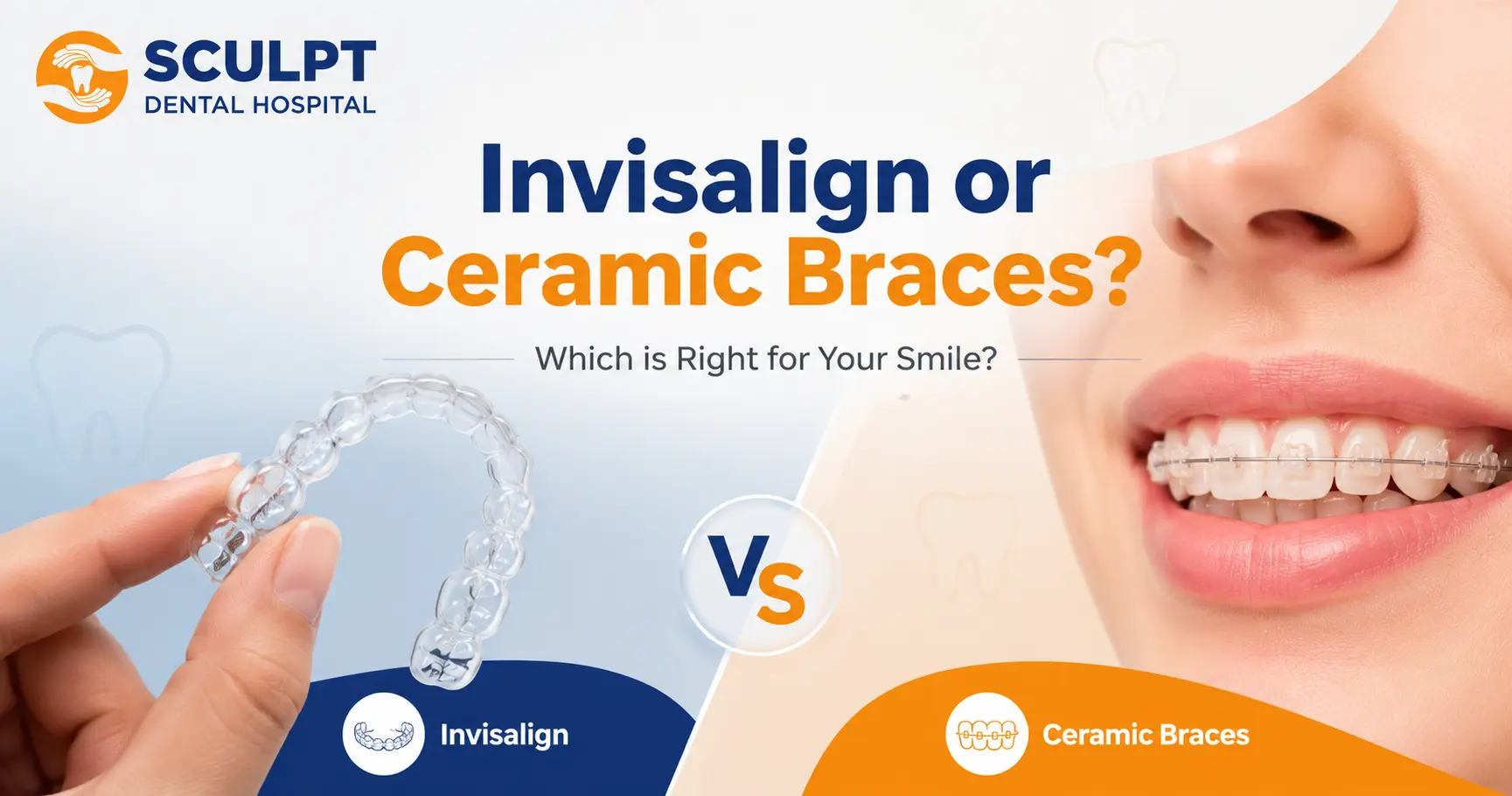
Choosing between Invisalign and ceramic braces can be confusing if you want straighter teeth without making your orthodontic treatment too noticeable. The best Invisalign treatment in Chennai may suit people who value a removable, discreet option, while ceramic braces can be a better choice when you need a fixed appliance with consistent tooth movement. The right option depends on your teeth, bite, treatment goals, lifestyle and ability to follow your dentist’s instructions.
What Is the Difference Between Invisalign and Ceramic Braces?
Invisalign uses a series of custom-made clear aligners that gradually move the teeth. The aligners are removable, allowing you to take them out for eating, brushing and flossing.
Ceramic braces use brackets attached to the teeth and orthodontic wires to apply controlled pressure. The brackets are usually tooth-coloured, making them less noticeable than traditional metal braces.
Both treatments aim to improve tooth alignment and bite. However, they work differently and place different demands on the patient. The American Dental Association notes that orthodontic treatment can correct crowded or crooked teeth and bite problems, while removable aligners can be used under the supervision of a dental professional.
Invisalign vs Ceramic Braces: Which Is Better?
There is no single option that is better for everyone. Invisalign may be preferable for patients who want a discreet and removable treatment, while ceramic braces may be more suitable for people who need a fixed appliance and want a less noticeable alternative to metal braces.
Your dentist or orthodontist should assess your teeth and bite before recommending one. The complexity of your orthodontic problem matters more than appearance alone.
| Factor | Invisalign | Ceramic Braces |
| Appearance | Nearly invisible | Tooth-coloured and discreet |
| Removable | Yes | No |
| Eating | Aligners are removed while eating | Some food restrictions may apply |
| Oral hygiene | Easier to brush and floss normally | Requires careful cleaning around brackets |
| Compliance | Requires consistent wear | Fixed to the teeth |
| Comfort | Smooth plastic aligners | Brackets and wires may cause irritation |
| Complex tooth movement | Depends on the case | Can be useful for many complex movements |
| Lifestyle | Flexible | Requires a more structured routine |
The choice should therefore be based on your clinical requirements as well as your personal preferences.
How Does Invisalign Work?
Invisalign treatment uses a sequence of clear aligners designed to move your teeth gradually toward their planned positions. Each stage applies controlled pressure to specific teeth.
Because the aligners are removable, patients can generally maintain their usual brushing and flossing routine more easily than with fixed braces. However, removability also means the treatment depends on patient compliance.
If you frequently forget to wear your aligners, treatment may not progress as planned. This is one reason an orthodontic evaluation is essential before starting treatment.
For patients considering the best Invisalign treatment in Chennai, a consultation should include an assessment of the teeth, gums, bite, existing dental problems and suitability for clear aligner therapy.
Learn more about Invisalign Treatment in Chennai at Sculpt Dental Hospital
What Are Ceramic Braces?
Ceramic braces work in a similar way to conventional fixed braces, but their brackets are made from tooth-coloured or clear ceramic material.
They are attached directly to the teeth and connected with orthodontic wires. Since the appliance remains fixed throughout treatment, you do not have to remember to put it back after meals.
Ceramic braces can be an attractive option for adults and teenagers who want fixed orthodontic treatment with a more discreet appearance.
However, ceramic brackets still require careful cleaning. Food and plaque can collect around brackets, so maintaining good oral hygiene is particularly important during orthodontic treatment.
Explore Dental Braces in Chennai at Sculpt Dental Hospital
Is Invisalign More Comfortable Than Ceramic Braces?
Many patients find clear aligners comfortable because they do not have metal wires or conventional brackets. However, Invisalign can still cause pressure or mild discomfort when a new aligner is introduced.
Ceramic braces can also cause temporary soreness, particularly after placement or adjustments. Brackets may rub against the cheeks or lips during the early stages of treatment.
Comfort varies from person to person. More importantly, persistent pain or irritation should be discussed with your dentist rather than ignored.
Which Is Easier to Maintain?
Invisalign generally offers more flexibility for daily oral hygiene because the aligners can be removed before brushing and flossing.
With ceramic braces, you need to clean carefully around the brackets and wires. Your dentist may recommend specific brushing and interdental cleaning techniques.
Whichever treatment you choose, maintaining oral hygiene remains essential. The ADA recommends personalized oral-care guidance based on an individual’s dental needs and risk factors.
Can You Eat Normally With Invisalign and Ceramic Braces?
With Invisalign, the aligners are removed while eating and drinking, so you do not have the same appliance-related food restrictions associated with fixed braces. You should clean your teeth before putting the aligners back in.
Ceramic braces require more care while eating. Hard, sticky or excessively chewy foods can damage orthodontic appliances, so your dentist may recommend avoiding certain foods during treatment.
This difference can make Invisalign appealing to people who want fewer changes to their normal eating routine.
Which Option Is Better for Adults in Chennai?
For many adults, appearance and convenience are major considerations. Invisalign offers a discreet approach because the aligners are designed to be difficult to notice during normal conversations.
Ceramic braces are another discreet option for adults who prefer fixed orthodontic treatment.
Your profession, social activities, travel schedule, treatment complexity and willingness to follow aligner-wearing instructions can all influence the decision.
For example, someone who travels frequently and wants to remove the appliance during meals may prefer Invisalign. Someone who does not want the responsibility of remembering to wear removable aligners may prefer ceramic braces.
How Do You Choose Between Invisalign and Ceramic Braces?
A practical way to decide is to consider five questions:
- How complex is your orthodontic problem?
Your bite and required tooth movements can influence which treatment is appropriate. - Do you want a removable treatment?
Invisalign can be removed when eating and cleaning your teeth. - Can you consistently follow your aligner-wearing instructions?
Removable treatment requires patient participation. - Do you prefer fixed treatment?
Ceramic braces remain attached to your teeth throughout treatment. - Which option fits your lifestyle?
Your work, travel, eating habits and daily routine can all matter.
The final decision should come after a professional orthodontic assessment rather than choosing solely based on photographs or online comparisons. The ADA also advises against unsupervised, direct-to-consumer orthodontic treatment because proper diagnosis, treatment planning and monitoring are important for patient safety.
Are Invisalign and Ceramic Braces Suitable for Everyone?
No. Orthodontic treatment needs to be planned according to the patient’s individual dental condition.
Crowding, spacing, bite problems, tooth position, gum health, existing dental work and the type of tooth movement required can all influence treatment planning.
In some cases, another orthodontic approach may be more appropriate. A dentist or orthodontist can determine whether Invisalign, ceramic braces, metal braces or another treatment option is suitable after examining your teeth and bite.
FAQs
1. Is Invisalign better than ceramic braces?
Neither is universally better. Invisalign may suit patients who want a removable and discreet option, while ceramic braces may suit patients who prefer fixed treatment. Your orthodontic condition should determine the final choice.
2. Are ceramic braces less visible than metal braces?
Yes. Ceramic braces use tooth-coloured or clear brackets, so they are generally less noticeable than conventional metal brackets. However, the orthodontic wire can still be visible.
3. Can Invisalign fix crooked teeth?
Invisalign can correct many alignment problems, but suitability depends on the type and complexity of the tooth movement required. A dental professional should evaluate your case before treatment.
4. Which is easier to clean, Invisalign or ceramic braces?
Invisalign can make daily brushing and flossing more straightforward because the aligners are removable. Ceramic braces require careful cleaning around brackets and wires.
5. How do I choose the right orthodontic treatment in Chennai?
Start with a professional orthodontic consultation. Your dentist can assess your teeth, bite, gum health, treatment goals and lifestyle before recommending Invisalign, ceramic braces or another suitable option.
Conclusion
The choice between Invisalign and ceramic braces is not simply about which one looks better. Invisalign offers removability and flexibility, while ceramic braces provide a fixed and discreet orthodontic option. The most suitable treatment depends on your dental condition, treatment goals, lifestyle and ability to follow the treatment plan.
If you are comparing orthodontic options in Chennai, a professional evaluation can help you understand which treatment is appropriate for your smile.
American Dental Association: Braces and Orthodontic Treatment
Looking for the right orthodontic option for your smile? Sculpt Dental Hospital can help you understand whether Invisalign or ceramic braces suit your needs. Book an appointment with Sculpt Dental Hospital to discuss your treatment options.